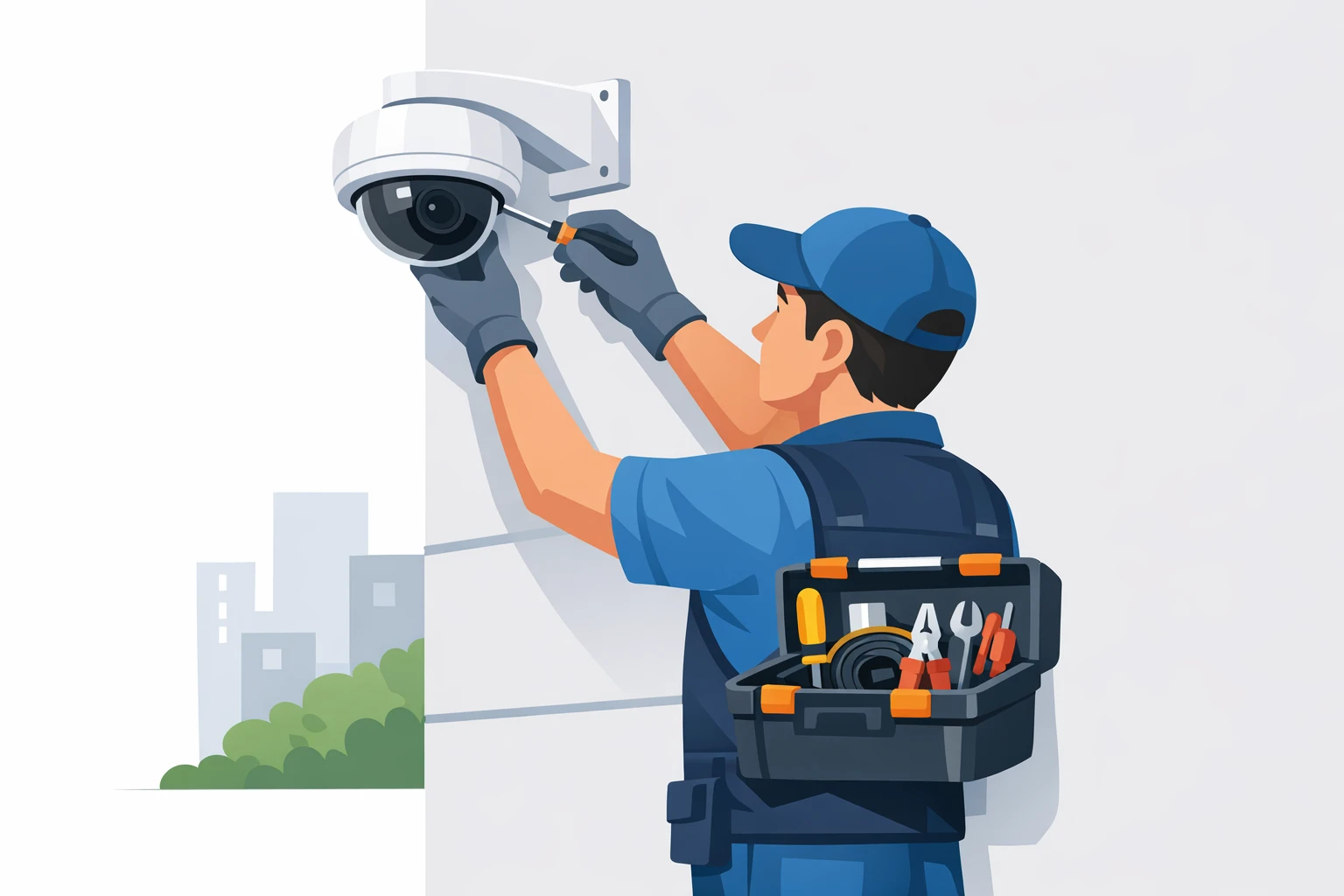
What is CCTV Installation?
Discover everything you need to know about CCTV installation, its benefits, and what it entails.
Looking for one? See our ranking of 34 cctv installation in Sydney
How CCTV Installation Works
CCTV (Closed Circuit Television) installation refers to the process of setting up surveillance cameras in your home or business to enhance security. This broadly involves assessing your property to determine the best locations for the cameras, mounting the cameras, setting up the cables and network, and configuring the system for access and monitoring. Let's look at the details.
First, a security consultant will perform an assessment to determine the most vulnerable areas that require monitoring. Then, cameras are mounted in determined strategic locations to have a clear view of these areas.
Next, cables are routed from the cameras to the DVR (Digital Video Recorder) or NVR (Network Video Recorder). This involves drilling holes and pulling cables through walls and ceilings, which can be quite labor-intensive.
Finally, the system is configured. The DVR or NVR is set up to record video feeds from the cameras, which can be viewed remotely on your computer, smartphone or tablet.
While it's possible to attempt a DIY CCTV installation, professional CCTV installers in Sydney usually do the job more effectively, ensuring the system works optimally since they understand the local regulations of NSW.
Key Components of CCTV Installation
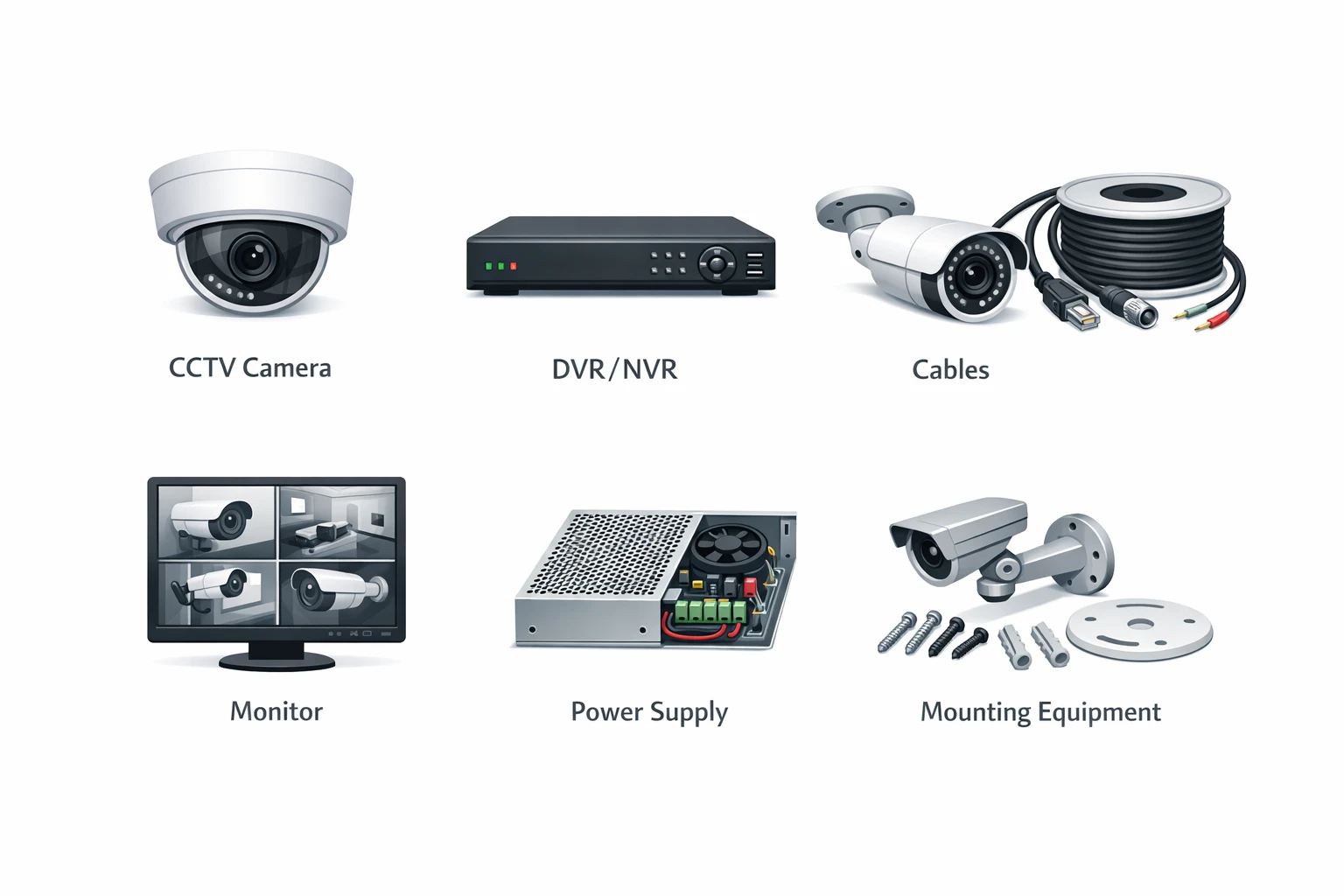
1. CCTV Cameras: These are the most visible components. They capture images and send them to the DVR or NVR.
2. DVR or NVR: This device receives footage from the cameras and stores it for future playback.
3. Cables: These connect the camera to the DVR or NVR, providing both power and a pathway for video signals.
4. Monitor: This allows the user to view live or recorded footage. It can be a dedicated monitor or any device with internet access.
5. Power supply: Cameras need power to operate, usually provided by power adapters.
6. Mounting equipment: This includes brackets and housings to secure cameras in place.
7. Connectors and adapters: These ensure compatibility between different parts of the system.
Types of CCTV Installation
There are different types of CCTV installation based on the requirements of the premises under surveillance. Here's a comparison of the most common types.
Type | Description | Best for | Range | Complexity
Indoor | Cameras are installed within a building. | Offices, Retail Stores. | Short range | Low to Medium
Outdoor | Cameras designed to withstand weather conditions are installed outside. | Perimeter monitoring, Public Spaces. | Varying ranges | Medium to High
Wireless | Uses Wi-Fi to transmit images, eliminating the need for cables. | Residential properties, Small Offices. | Depending on Wi-Fi strength | Medium
Wired | Cameras are connected to the recorder with cables. | Large properties, High-security areas | Long range | High
Night Vision | Cameras use infrared to capture images in the dark. | Around-the-clock surveillance, High-risk areas | Depending on IR capabilities | Medium
Benefits of CCTV Installation
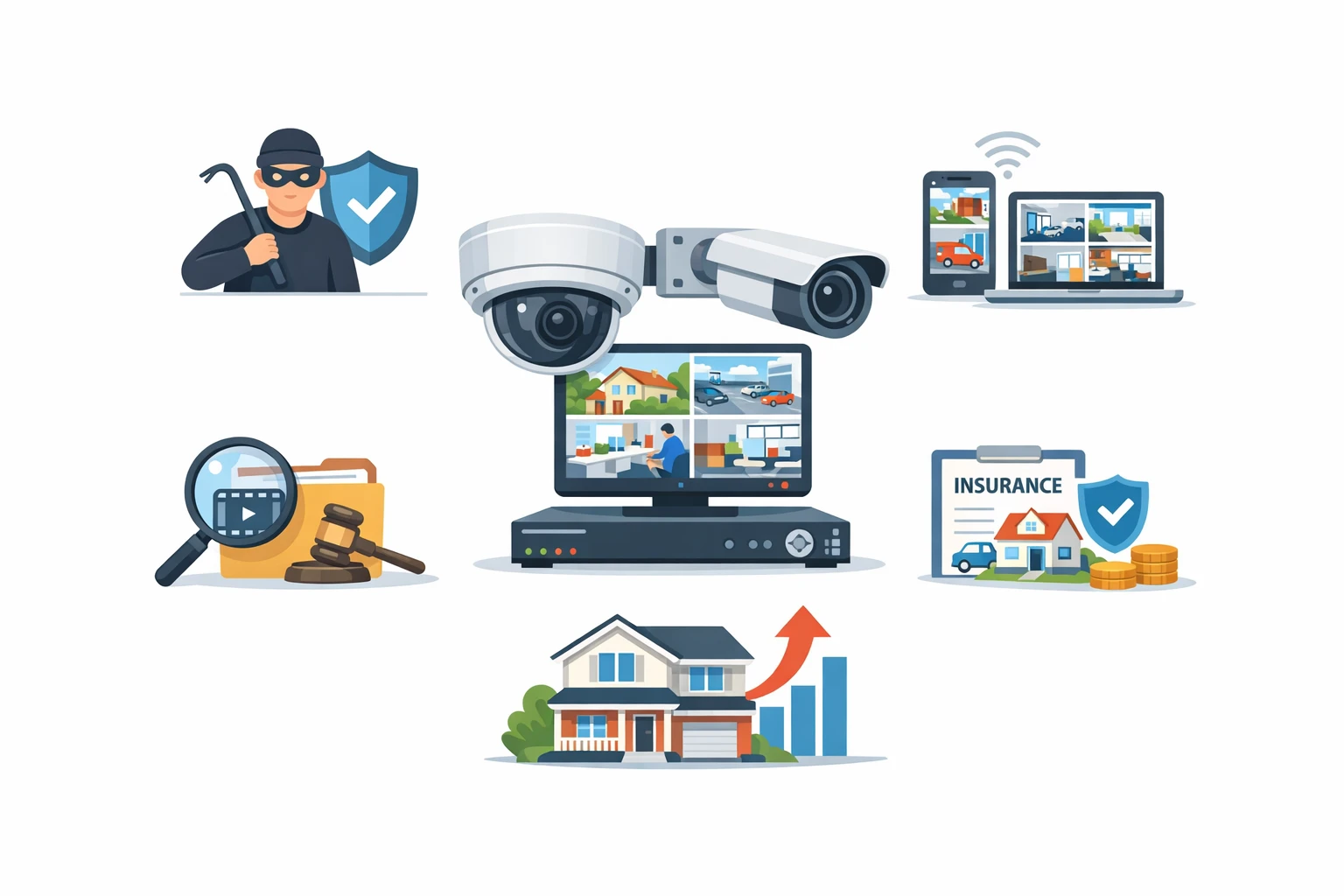
Top Benefits | Description
Security Enhancement | CCTV can deter potential criminal activities, reducing the risk of theft, vandalism, and break-ins.
Remote Monitoring | You can monitor your property remotely from your devices, giving you peace of mind.
Evidence Collection | In case of a security incident, CCTVs can provide crucial evidence.
Insurance Benefits | Some insurance companies may offer a discount if you have a CCTV system installed.
Property Value | A CCTV system can increase the value of your property, particularly in commercial setups.
CCTV installation adds an extra layer of security to your property, acting as both a deterrent to potential threats and a tool for collecting evidence should an incident occur. It's a worthwhile investment for property owners in Sydney and beyond in NSW.
Use Cases or Applications
1. Home Security: Homeowners in Sydney often use CCTV systems to deter burglars and monitor their property while they're away.
2. Office buildings: CCTV can monitor staff and customer behaviour, as well as deter corporate espionage.
3. Retail Stores: CCTV helps prevent shoplifting, protects staff, and ensures compliance with health and safety regulations.
4. Parking lots: CCTVs provide security in parking lots, reducing vehicle thefts and vandalism.
5. Warehouses: CCTV helps monitor stock, controls access to certain areas, and deters theft.
6. Schools: CCTV can enhance student safety, prevent vandalism, and monitor classroom activity.
7. Municipal use: Local councils in NSW use CCTV for traffic monitoring and public safety.
Considerations Before Adoption
Before you decide on a CCTV installation, consider the following:
- What is your main goal for the installation? E.g., deterring crime, monitoring activity.
- Have you identified the key areas you wish to monitor?
- What's your budget for the installation and maintenance?
- Have you considered both the benefits and obligations of installation, including privacy issues?
- Are you equipped to manage the recorded data properly?
- Have you consulted with a professional installer who is familiar with NSW regulations?
It's crucial to think through these points prior to installation to ensure your CCTV setup meets your requirements and complies with relevant data protection and privacy laws.
Common Misconceptions

Myth: CCTV is only for businesses. → Reality: Residential properties in Sydney and throughout NSW greatly benefit from CCTV installation for enhanced security.
Myth: CCTV is too expensive. → Reality: The cost of CCTV installation can vary, and affordable solutions are readily available for homes and businesses alike.
Myth: CCTV installation requires a lot of cabling. → Reality: With advances in technology, wireless CCTV systems that require minimal cabling are available.
Myth: CCTV cameras invade privacy. → Reality: Installers should respect privacy by positioning cameras to avoid areas like bathrooms and changing rooms.
Myth: CCTV recorded footage cannot be used as evidence in court. → Reality: CCTV footage is often admissible in court as long as it complies with prescribed legal and ethical requirements.
Conclusion
CCTV installation is a powerful tool that can enhance security for homes and businesses in Sydney and throughout NSW. Despite some misconceptions, it's a worthy investment, offering benefits like increased security, remote monitoring, and evidence collection. Before proceeding, it's important to identify your security needs, familiarise yourself with the installation process, and choose a solution that fits your requirements and budget. For optimal results, consider seeking advice from a professional installer.
Common questions
- How costly is CCTV installation?
- The cost of CCTV installation can vary greatly depending on the type of system, number of cameras, and whether it's a wired or wireless setup. It's best to get a quote from a professional CCTV installer.
- Can I install a CCTV system by myself?
- Yes, you can. However, it could be complex depending on the system. Consider seeking professional assistance for a seamless and effective installation.
- What are the legal requirements I need to consider in NSW?
- While CCTV can be a good security measure, it's crucial to comply with privacy laws - avoid pointing cameras at your neighbour's property or public areas. More detailed information can be obtained from qualified installers or legal experts in NSW.
- Are there wireless CCTV systems?
- Yes, there are wireless CCTV systems that use Wi-Fi to transmit images, reducing the need for cumbersome cabling.
- How reliable are CCTV systems?
- When professionally installed and maintained, CCTV systems can be highly reliable. Many come with features like remote access, night vision, and motion detection, enhancing their effectiveness.
- Will my CCTV system still work during a power outage?
- Some CCTV systems come with battery backups that can keep them running for a limited time during a power outage. However, details will vary between different systems.