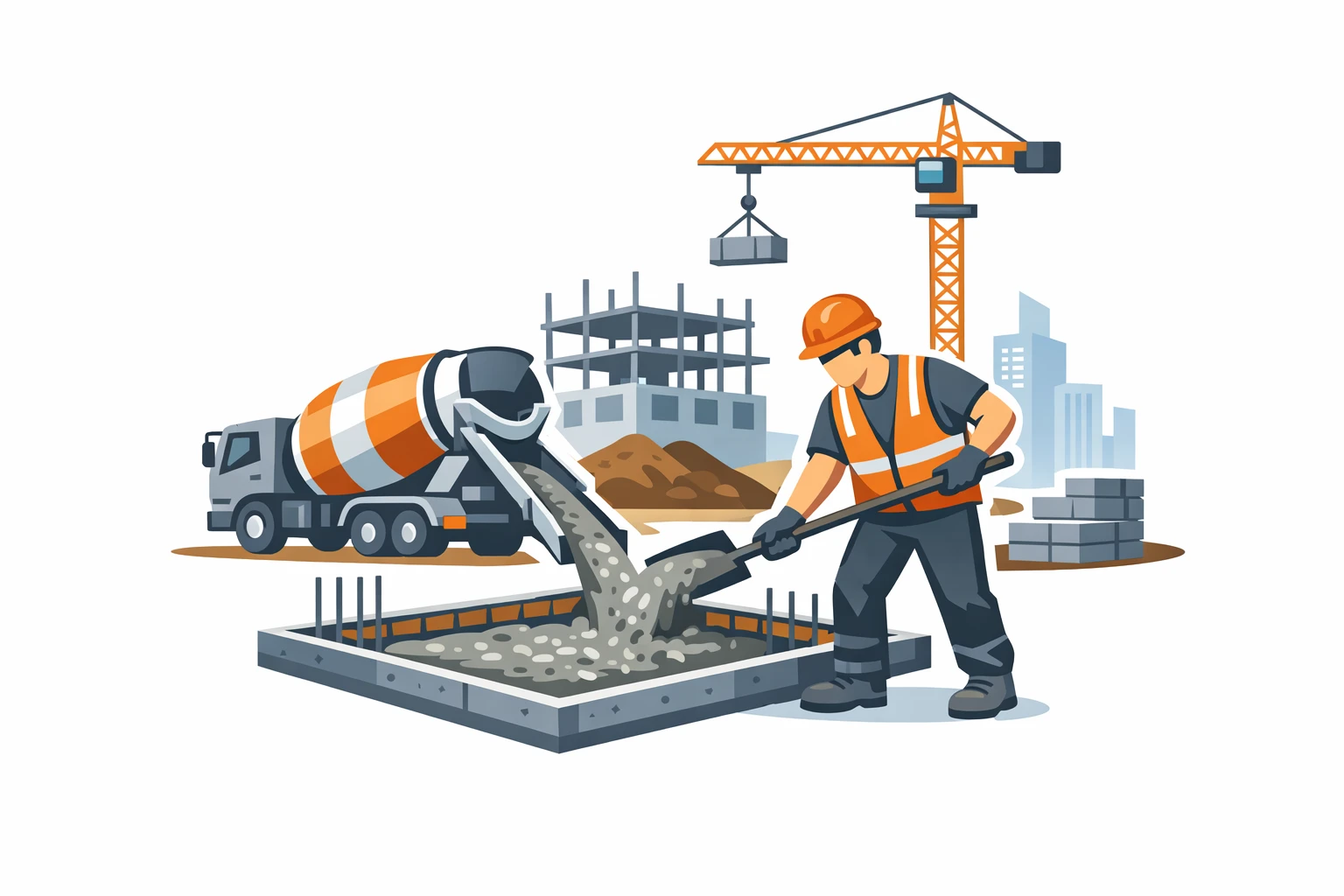
What is a Concreter?
Learn all about the role, key responsibilities and benefits of a Concreter in Sydney, NSW. Separate fact from fiction about this essential construction role.
How a Concreter Works
A concreter is an essential professional in almost all construction projects, especially in Sydney, located in New South Wales. They typically operate in teams to lay out, place, shape, and surface concrete for building foundations, walls, floors, roads, and other structures. The following is a step-by-step guide to the workflow of a typical concreter.
Step 1: Analysis of Construction Plans - The concreter starts by evaluating the project blueprints and identifying what will be required for the job.
Step 2: Preparing the site - This involves cleaning and levelling the construction site, ensuring it's ready for concrete pouring.
Step 3: Building the framework - Here, the concreter creates a formwork or mould that dictates the concrete’s shape and size.
Step 4: Mixing and Pouring - Next, the concreter skillfully mixes the concrete according to the correct ratio, then pours it into the formwork.
Step 5: Spreading and Levelling - Using a variety of specialized tools, the concrete is spread and levelled to the requirements of the project.
Step 6: Curing - After the concrete has been placed, it's left to harden or cure. This process may take a few days or weeks depending on the specifics of the project.
Step 7: Finishing - Lastly, the concreter applies any needed finishes such as brushing or polishing, leaving a neat and durable structure.
Key Components of a Concreter’s Job
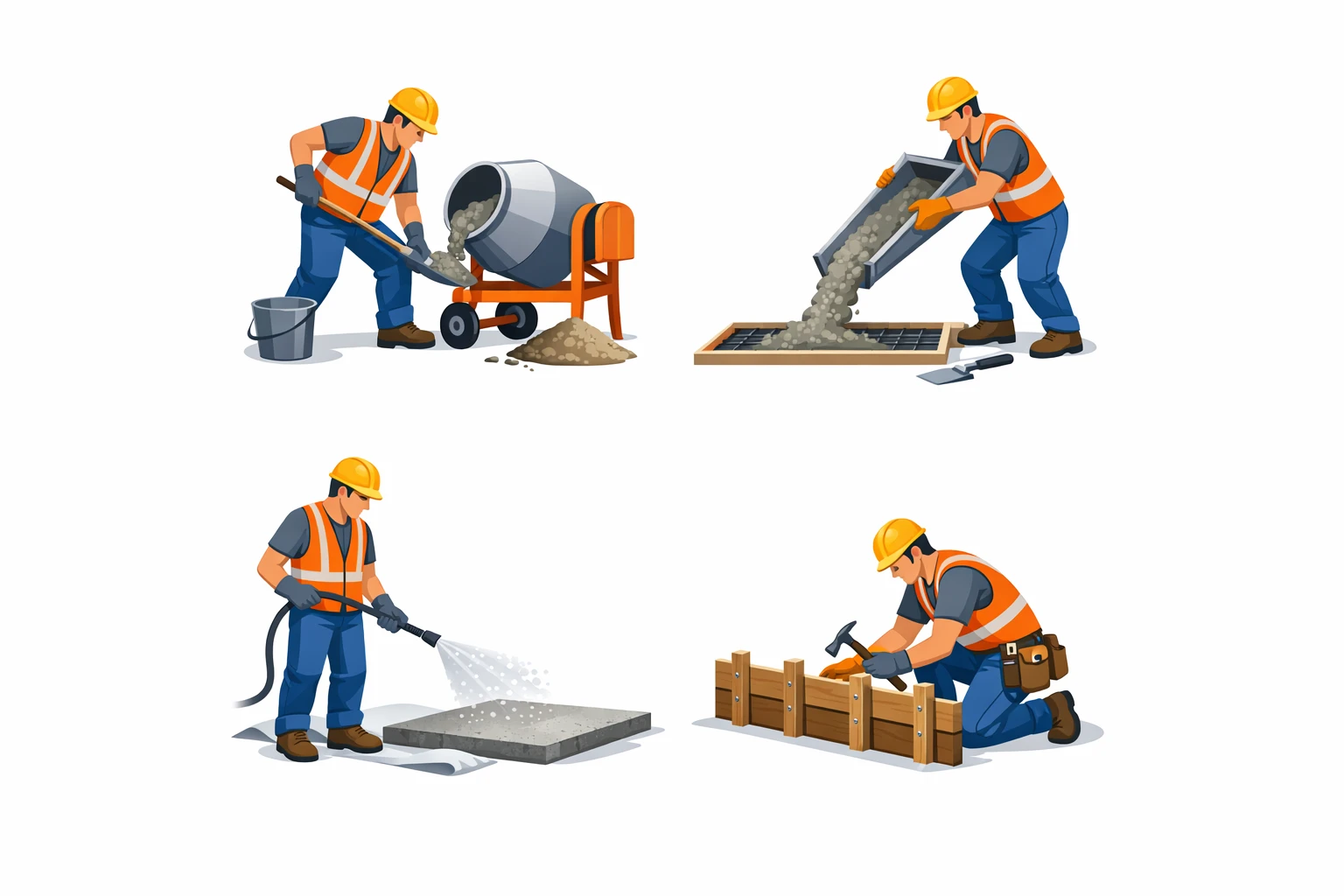
Concrete Mixing - Concreters are equipped with knowledge on how to accurately combine all the required materials in suitable proportions to achieve the desired strength and durability.
Formwork Construction - This involves creating a temporary or permanent mold into which concrete is poured. It is fundamental for shaping the concrete.
Pouring - This process takes proficiency to carry out effectively. It involves carefully adding the prepared concrete mixture into the built framework.
Finishing - A concreter gives the final touch to the structure, providing an appealing and smooth surface.
Curing - This process ensures the concrete achieves maximum strength. It’s conducted by keeping the concrete damp after it has hardened.
Safety - A concreter must always prioritize safety, adhering to standard safety protocols and using proper equipment.
Types of Concreter Jobs
Residential Concreter | Mostly working on homes, driveways, or small scale building
Commercial Concreter | Works on larger scale projects like business centres, malls, etc.
Civil Concreter | Specializes in public infrastructure such as roads, bridges, tunnels
Industrial Concreter | Handles industrial projects like factories, power plants, etc.
Decorative Concreter | Specializes in decorative concrete techniques like stamping or staining.
Benefits of Hiring a Concreter
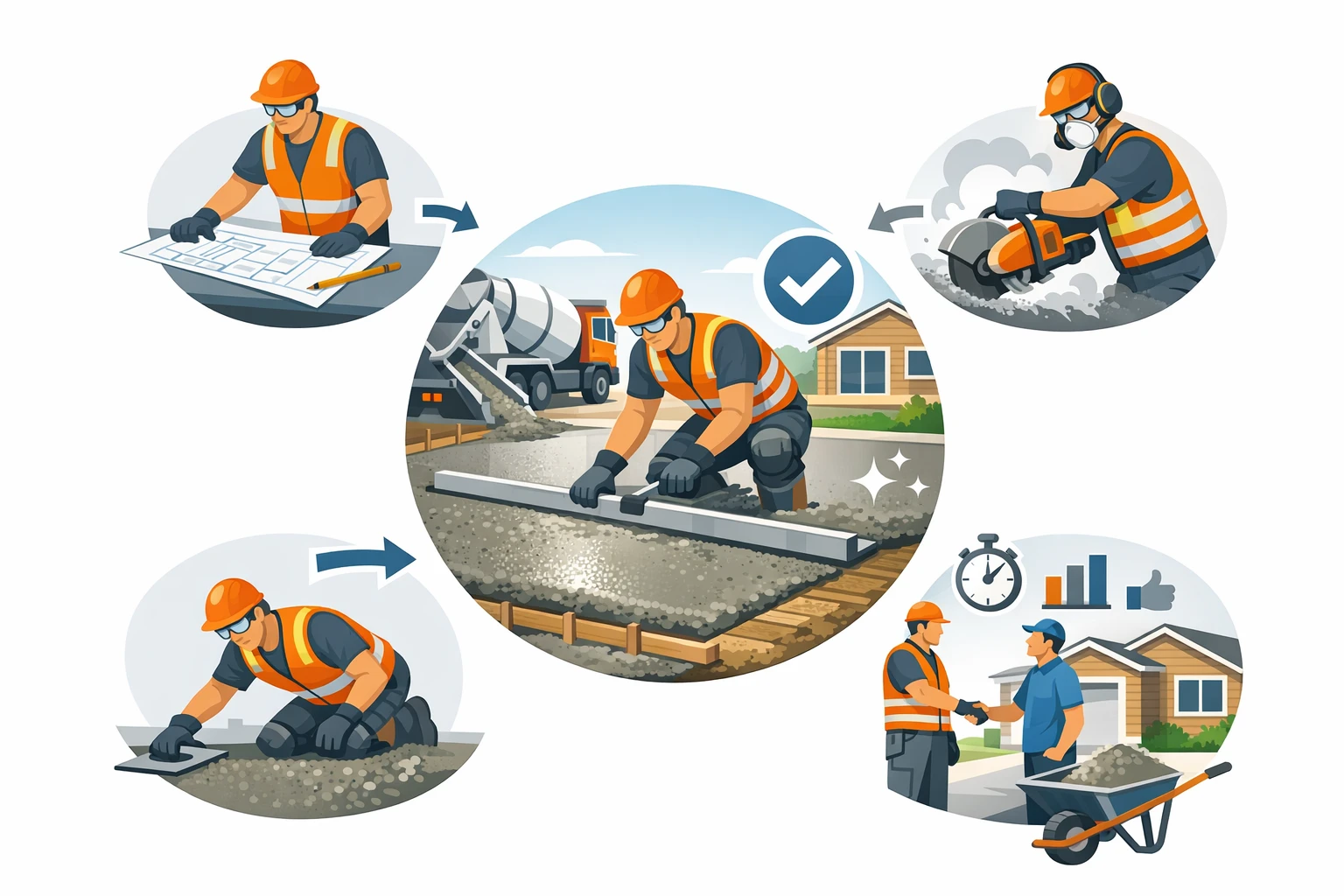
Professional Results | A professional concreter delivers top-quality that can last for years
Time Efficiency | Having vast experience, a concreter efficiently balances speed and quality for timely completion of projects
Safety | concreters follow safety standards and use appropriate gear to ensure a safe working environment.
Hiring a concreter is essential in the construction industry, often providing the groundwork for all projects. Their unique skills and expertise deliver solid and lasting results that contribute to the success of any built infrastructure.
Use Cases or Applications
Building a residential house in Sydney, where the concreter creates the foundations.
A city council workforce in NSW always needs a concreter, for road and footpath works.
The Sydney business district construction site where the concreter is responsible for building multi-story structures.
A landscaping company in Sydney hires a concreter to construct a decorative garden path.
The installation of a suburban driveway in a Sydney home.
A concreter works in the renovations planned for a heritage-listed building in NSW.
In the setting of urban infrastructure projects in Sydney, a concreter is vital.
Considerations Before Hiring a Concreter
- Is the concreter licensed for their trade by the NSW authority?
- Do they have positive testimonials from previous clients in Sydney?
- Can they provide an accurate estimate of the time and cost for your specific project?
- Do they have a good safety record and adhere to industry-standard safety practices?
- Will they provide a written contract outlining their responsibilities and fees?
Remember, it’s important to thoroughly vet a concreter before hiring. Always ensure they are appropriately licensed and have a good reputation for quality workmanship.
Common Misconceptions
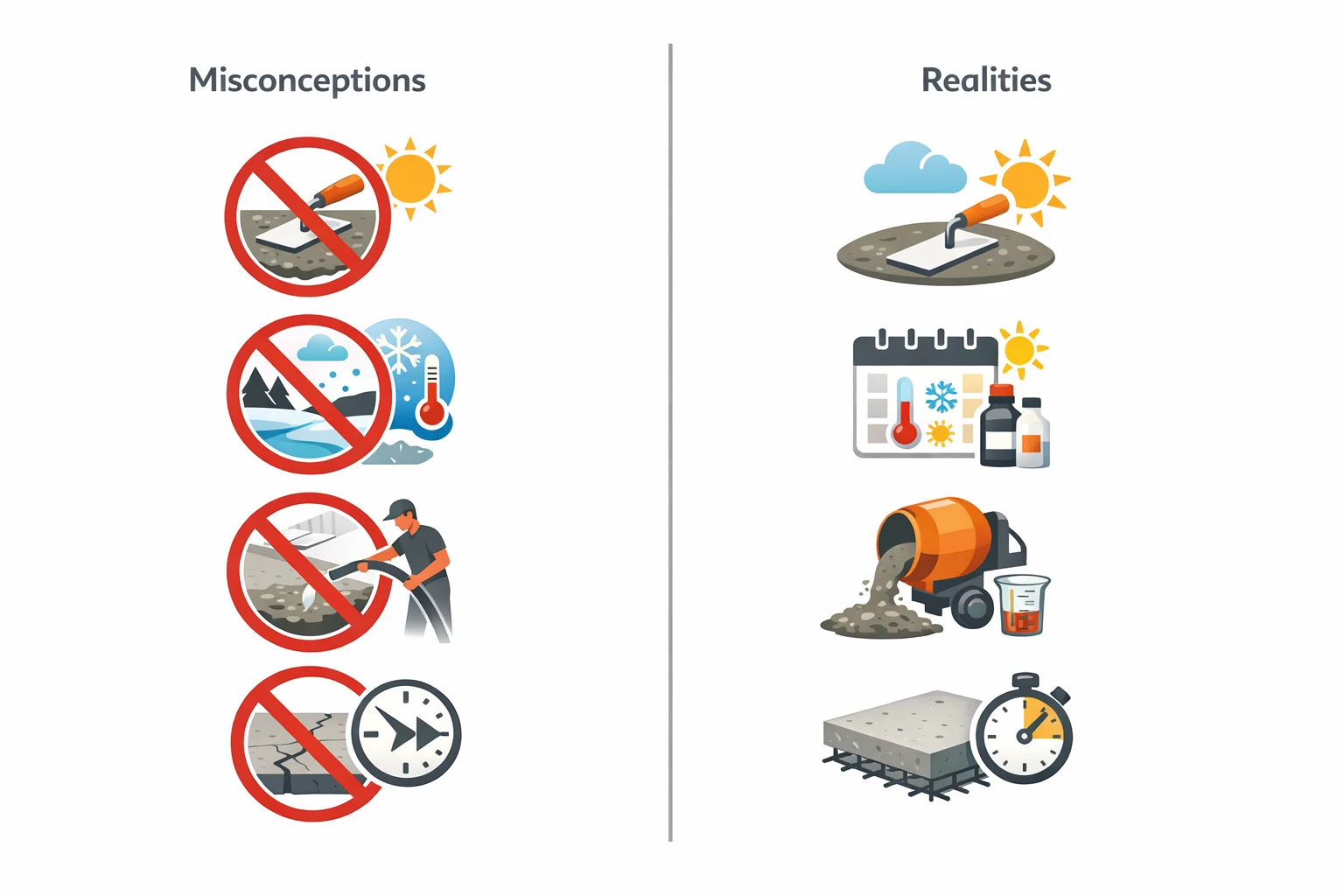
Myth: Concreting is an unskilled labor. → Reality: Concreting is a specialized trade that involves a significant amount of training and experience.
Myth: All concreting work is the same. → Reality: Concreting jobs can vary widely in complexity and scope.
Myth: Any handyman can do concreting. → Reality: Proper concreting requires specialized knowledge, tools, and techniques.
Myth: Concreters only work on construction sites. → Reality: Concreters can work across a diverse range of settings including residential, commercial and industrial projects.
Myth: Concrete is the same thing as cement. → Reality: Cement is just one component of concrete, which also includes sand, gravel, and water.
Future of Concreting
As construction demands grow in Sydney and across NSW, so does the need for professional concreters. In the future, this trade is expected to see advancements in concrete technologies and building techniques. This includes the increased use of recycled materials in concrete mixes and the adoption of more environmentally sustainable practices. There's also the prospect of implementing more advanced machinery and equipment for increased efficiency and safety. As the evolution of construction continues, the role of the concreter is anticipated to grow and adapt with these changing tides.
Related Concepts and Comparisons
Bricklaying and Concreting | While both involve working with a hard material, bricklayers assemble bricks using mortar while concreters pour and finish concrete.
Carpentry and Concreting | Both may work with formwork, however, carpenters mainly deal with wood and building structures while concreters focus on concrete for construction.
Concreting and Plastering | Both involve applying a mixture to create a smooth finish, but plastering is usually for interior walls while concreting is typically for structure foundations and floors.
Professional Concreter | Experienced and licensed with a strong track record, typically hired for larger or more intricate projects.
DIY Concreting | Sometimes chosen for smaller tasks, but often won't yield the same level of precision and durability as a professional service.
Conclusion
A concreter plays a vital role in almost all construction projects, with their work forming the basis of our infrastructure. Whether it’s a home or a commercial building in Sydney, a roadway in NSW, or a public plaza, the concreter’s skill and expertise help shape our built environment. Understanding their role, the various types of jobs they do, and the benefits they bring to a project can guide you when planning your next construction project in Sydney, NSW.
Common questions
- What is the role of a concreter?
- A concreter constructs and repairs the frameworks for structures using concrete. They mix, place, spread, compact, and finish the concrete for these structures.
- What skills are important for a concreter?
- Concreters need to be physically fit, good at practical work, able to work with a team, able to read plans and specifications, and have a good understanding of safety requirements.
- What types of projects do concreters work on?
- Concreters can work on a wide range of projects, from small scale residential tasks like driveways and patios, to larger constructions like building foundations, roads, and bridges.
- How do I hire a good concreter?
- Ensure the concreter has a valid licence, extensive experience in the field, and positive reviews from past clients. It's also important they provide a clear cost and timeline estimate for your project.
- Why should I hire a professional concreter instead of doing it myself?
- While some minor works can be a DIY project, hiring a professional ensures that the work is finished to a high standard, is durable, and is done in a safe manner.
- What is the future of the concreting?
- The future of concreting sees advancements in technologies and materials, with increased emphasis on sustainability and efficiency.