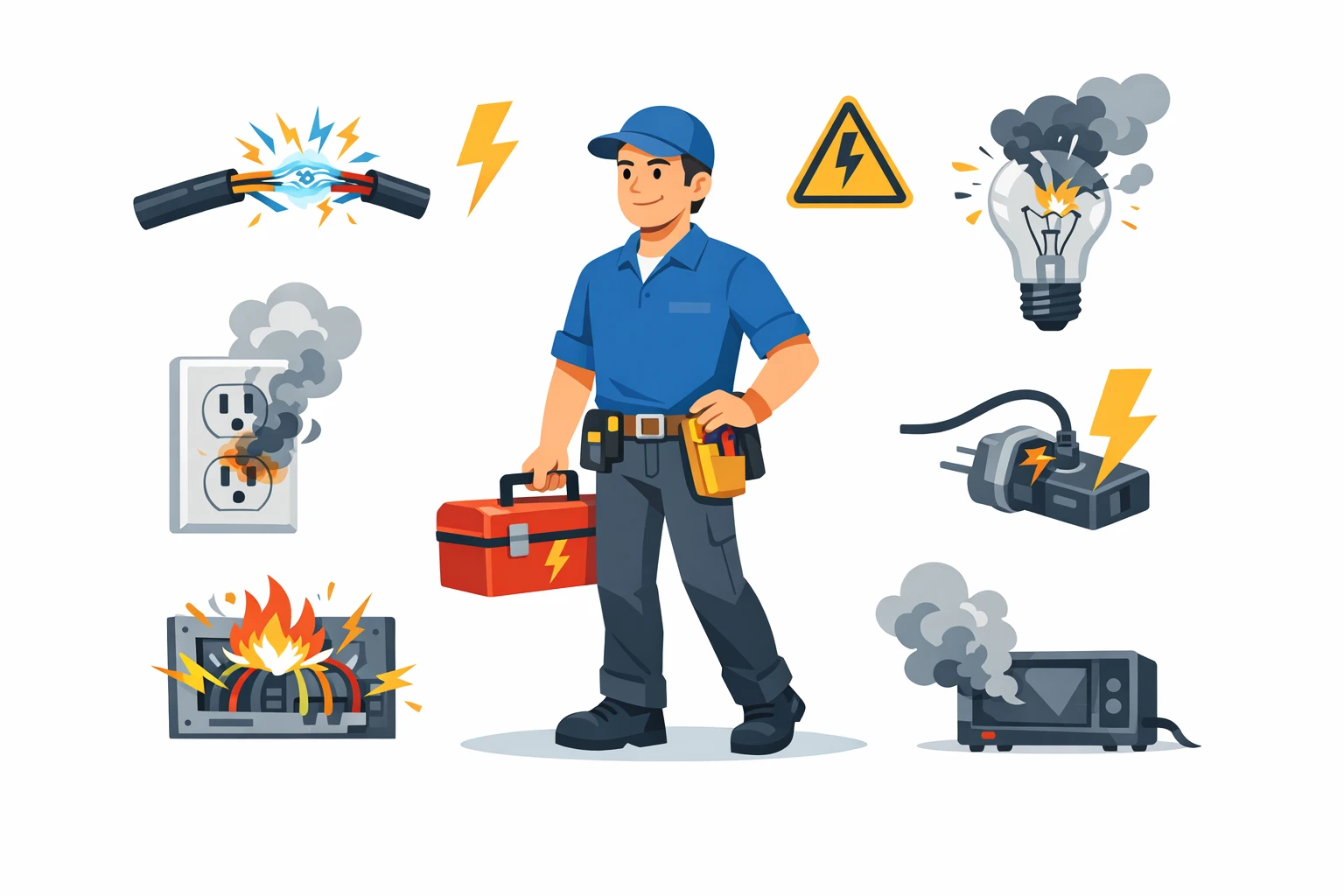
What is an Emergency Electrician?
Explore the realm of emergency electricians – their workflow, key components of their service, use cases, and several benefits in various situations.
Looking for one? See our ranking of 45 emergency electrician in Sydney
How Emergency Electrician Works
An emergency electrician is a trained professional who responds to urgent electrical issues that could potentially pose a safety risk or cause significant inconvenience. Some common situations that might necessitate the services of an emergency electrician include power outages, electrical fires, or malfunctioning appliances. In such instances, having the contact of a reliable emergency electrician is crucial.
When contacted, the emergency electrician typically begins by gathering information over the phone to assess the situation. After understanding the issue, the electrician often provides immediate remote assistance to ensure safety, such as guiding you to shut off the main power supply. Later, the electrician will visit your location to address the problem on-site. This may involve diagnosing the specific fault, repairing damaged wiring or components, and testing the repaired system for safety and functionality.
Post the on-site service, the emergency electrician usually provides a complete report detailing the performed work and any recommendations for future maintenance. Keep in mind, the costs and timeframe of such services may vary depending on the severity of the problem and the electrician's availability. It’s always wise to have a basic understanding of your home's electrical system and know when to call an emergency electrician.
Key Components of Emergency Electrician

Immediate Response: Emergency electricians aim at providing an immediate response to electrical emergencies, any time of the day, reducing downtime and potential dangers.
On-site Diagnosis: They perform an on-site thorough check to identify the root cause of the problem, and make sure it doesn't reoccur by fixing it right the first time.
Safety Assurance: Due to their extensive training and experience, these professionals adhere to safety standards while solving electrical issues, mitigating the risk of electrical hazards.
Equipment and Tools: They come equipped with the necessary tools and equipment to handle different types of electrical emergencies.
Problem Resolution: Their services cover repair of faults, replacement of damaged parts, rewiring, and increasing electrical capacity when required.
Advice and Recommendations: Apart from fixing the immediate issue, they provide tips for maintaining electrical health and avoiding similar problems in the future.
Types of Emergency Electrician
Residential Emergency Electricians | Best for home electrical emergencies | Cost varies | Moderate complexity Commercial Emergency Electricians | Best for large-scale facilities like businesses, schools | Cost varies | High complexity Industrial Emergency Electricians | Best for factories, power plants | Cost varies | Highest complexity
Residential emergency electricians handle electrical emergencies within households, from minor circuit break-outs to major power shutdowns. Their duties often involve a moderate level of complexity.
Commercial emergency electricians target larger establishments like offices, shopping malls, or schools. They have experience managing complex power systems and ensuring minimal disruption to business operations.
Industrial emergency electricians specialize in factories, plant facilities, and similar setups. The complexity here can be very high due to the expansive nature of industrial wiring and increased power requirements.
Benefits of Emergency Electrician

Availability | 24/7 availability during emergencies Safety | Prevention of electrical accidents and fires Efficiency | Quick restoration of normal electrical functions Prevention | Early detection of potential problems Peace of Mind | Assurance of professional handling of emergency situations
Whether at home or in a commercial setting, an emergency electrician provides multiple benefits. Immediate access and around-the-clock availability can prevent further damage and quickly restore normalcy. Ensuring safety during an electrical emergency is crucial and these professionals play a significant role in handling hazards. By efficiently restoring power and relieving you from the stress of unpredicted incidents, an emergency electrician provides the ultimate peace of mind.
Remember, while emergency electricians are indispensable in times of crises, regular maintenance and proactive inspections can also keep potential electrical emergencies at bay.
Use Cases or Applications
Power Outages: When a sudden power cut occurs and the neighbourhood is unaffected, contacting an emergency electrician can help restore electricity quickly.
Short Circuits: Malfunctioning appliances or faulty wiring can often lead to short circuits, posing a serious danger. Emergency electricians are equipped to handle such scenarios.
Electrical Fires: In the unfortunate event of an electrical fire, after ensuring everyone's safety and contacting the fire department, an emergency electrician can evaluate and assess the damage.
Overloaded Circuit: If your power switches off frequently because too many devices are connected at once, an emergency electrician can safely increase circuit capacity.
Exposed Wiring: Contact an emergency electrician when you come across exposed wiring at home, especially if it's in an area where children or pets have access.
Flickering Lights: If your lights flicker when switched on, especially during storms, it can indicate loose wiring or another serious issue which needs prompt attention.
Water Damage: In cases where your electrical system has been exposed to water due to flooding or leaks, an emergency electrician can ensure system safety before power re-energizing.
Considerations Before Adoption
Before seeking help from an emergency electrician, there are several considerations to keep in mind. Understand the nature of the problem, know when to call, and have an understanding of basic electrical safety. Remember these questions:
- Do I know how to safely turn off the main power supply in my property? - Am I able to describe the problem clearly over the phone? - Do I have a clear understanding of the cost involved in emergency services? - Is the electrician licensed and insured? - Have I checked the credibility of the electrician or service provider? - Can the electrician help with future maintenance or prevention for the issue? - Have I considered the response time of the electrician?
Common Misconceptions

Myth: Any electrician can handle emergency services → Reality: Not all electricians specialize in emergency services. Emergency electricians are specifically trained to work under pressure in urgent situations.
Myth: It’s cheaper to fix electrical issues yourself → Reality: DIY fixes can lead to bigger problems down the line. It’s cost-effective and safer to hire professionals.
Myth: Flickering lights are normal during bad weather → Reality: Flickering lights can indicate a serious electrical issue and it’s important to have them checked.
Myth: All electrical fires can be put out with water → Reality: Water can make an electrical fire worse. An appropriate fire extinguisher should be used instead.
Myth: Emergency electrical services are notably more expensive → Reality: The cost can vary, but considering the fast response, safety compliance, and problem resolution, it could save you from more expenses eventually.
Future of Emergency Electrician
As technology evolves and our reliance on electrical devices grows, the role of the emergency electrician is becoming more crucial. From smart homes to expansive business facilities, the complexity of electrical systems is increasing. This may lead to a higher demand for qualified emergency electricians capable of dealing with modern electrical systems and issues. The incorporation of AI and IoT devices is predicted to influence the industry, possibly making diagnostics faster and more efficient. Moreover, there can be smarter interfaces for the public to report emergencies, leading to better response times. However, with these advancements, concerns about cybersecurity and data privacy may also arise, shaping the requisite skills for future electricians.
Related Concepts and Comparisons
Residential Electrician vs Emergency Electrician Regularly works on home electrical systems | Capable of handling immediate electrical emergencies Works within business hours | Accessible 24/7
Broadly, a standard residential electrician deals with installation, maintenance, and upgrades of electrical systems in homes and generally operates during regular business hours. On the other hand, emergency electricians are geared towards dealing with unexpected and immediate electrical crises, providing services around the clock.
Conclusion
An emergency electrician plays a crucial role in ensuring safety and convenience during electrical emergencies. From residential to industrial settings, their expertise can prevent potential hazards and restore normalcy rapidly during unexpected incidents. Familiarising oneself with when to call for help and having a reliable emergency electrician's contact saved is an important part of ensuring electrical safety in your environment. So while you hope never to face a major electrical emergency, it's always good to know there's a professional you can count on.
Common questions
- When should I call an emergency electrician?
- You should call an emergency electrician in cases of sudden power outages, electrical fires, short circuits, and other dangerous electrical issues that require immediate attention.
- What kind of tools does an emergency electrician use?
- Emergency electricians use a range of tools like multimeters, wire strippers, thermal scanners, circuit finders, and safety gear, depending on the nature of the problem.
- Are all electricians qualified to be emergency electricians?
- No, not all electricians are qualified to be emergency electricians. Being an emergency electrician requires additional training, experience, and the ability to work under pressure.
- What are some basic electrical safety tips?
- Some basic tips include not overloading electrical outlets, not using damaged appliances or cords, avoiding water near electrical devices, and knowing how to switch off your main power supply.
- How can I prevent electrical emergencies?
- Regular inspections and upkeep of your electrical system can help prevent emergencies. This can include checking for damaged wires, not overloading circuits, and immediate repair of any electrical faults.
- Are emergency electricians expensive?
- The cost of an emergency electrician can vary depending on the nature of the task, materials used, and the professional's experience. However, considering the expertise and immediate service offered, it is often a valuable investment.