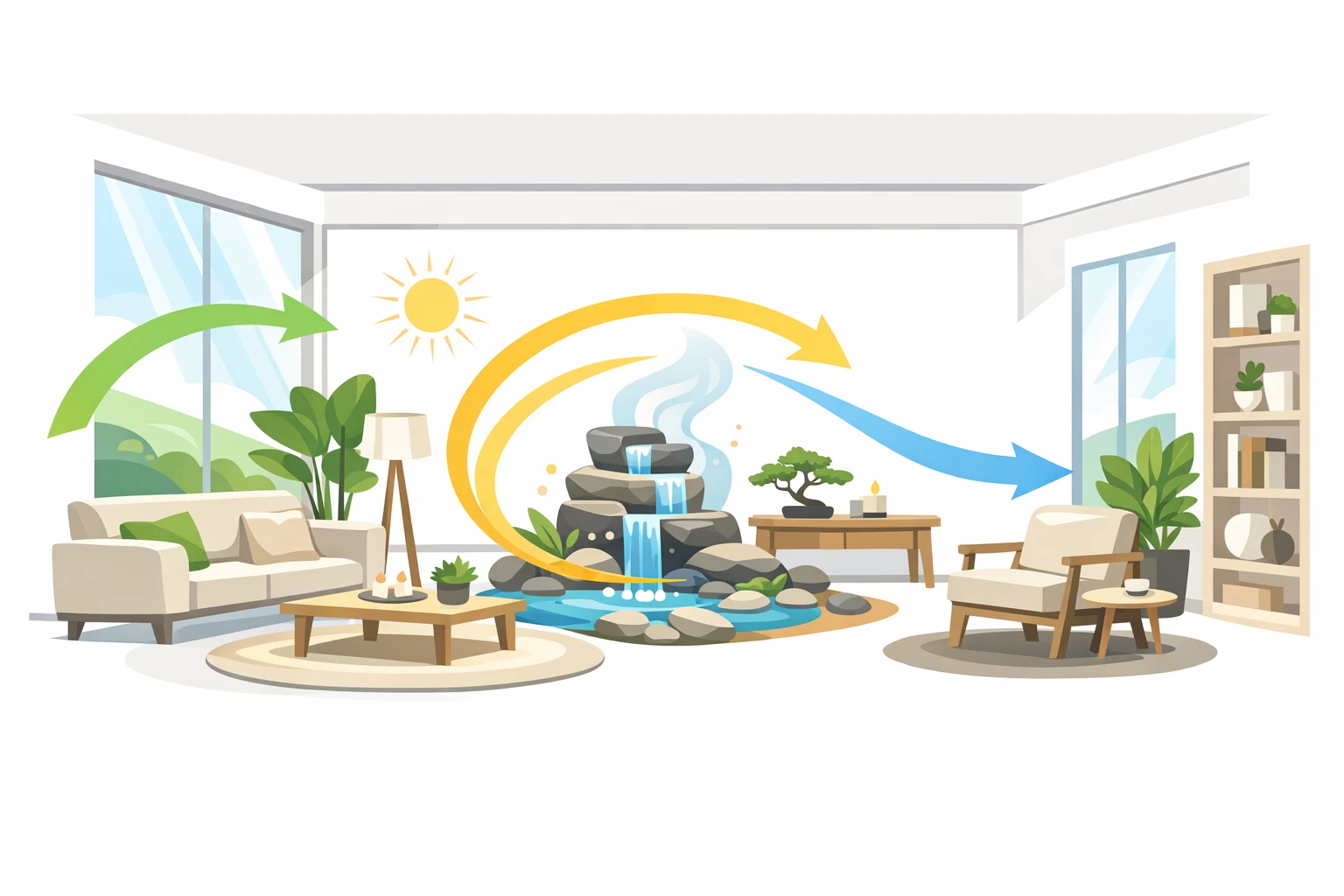
What is Fengshui?
Explore the basics of Fengshui, its benefits, uses, misconceptions, and how it works. Find out types of Fengshui used in Sydney and across NSW.
Looking for one? See our ranking of 11 fengshui in Sydney
How Fengshui Works
Fengshui, which translates to 'Wind and Water', is an ancient Chinese art and science centred on harmonising the energies within a given space, like homes or business offices. The fundamental principle of Fengshui involves the arrangement of items to achieve a balance of Yin and Yang energies, contributing to prosperity, health, and overall well-being.
A Fengshui practitioner usually begins by understanding the needs and objectives of the property owner. Following that, they assess the property's layout, the surrounding environment, and the property's unique energy, known as 'Qi'. Next, they analyse these findings using complex calculations and one of the traditional Fengshui schools, either the Form School or Compass School.
Based on their assessment, the practitioners provide specific advice on how to arrange items and manage spaces to enhance positive energy flow. The recommendations may involve changes in furniture placement, choice of colours, use of certain elements (like water or certain types of plants), and even structural changes. All these serve to attract and maintain positive Qi and ward off negative energy.
Key Components of Fengshui
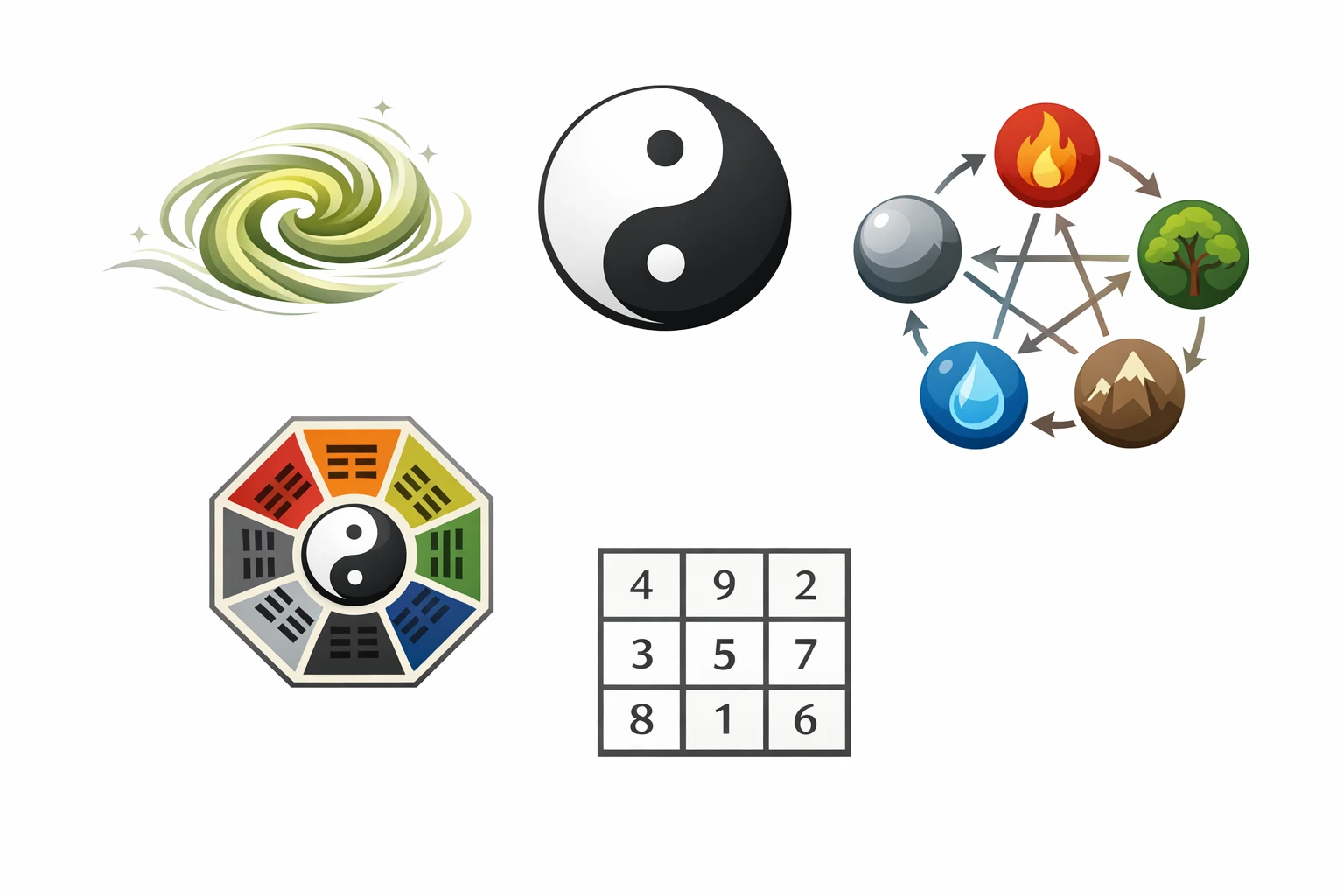
Fengshui consists of several key components, including Qi, Yin and Yang, Five Elements, Bagua, and Lo Shu Square.
Qi represents the invisible force that binds the universe, earth, and human beings together.
Yin and Yang are opposing forces that ensure balance in life and the universe.
The Five Elements (Wood, Fire, Earth, Metal, and Water) are cycled through productive and destructive interactions.
Bagua is an octagonal grid containing the symbols of the I Ching, the ancient oracles, used to map a room or home.
Lo Shu Square is a grid-based tool to analyse the energetic quality of a given space in relation to its occupants.
Types of Fengshui
The two traditional schools of Fengshui are the Compass School and the Form School.
Type | Description | Origin Compass School | Utilises complicated mathematical calculations based on the directional compass, Chinese astrology, and the time factor. | North China Form School | Focuses more on the form or shape of land, buildings, and rooms. It emphasises the four celestial animals (Black Tortoise, Green Dragon, White Tiger, Red Phoenix). | South China
While these are the two primary schools, several sub-schools or methods have evolved from them, all aiming to create a harmonious environment and heighten the positive flow of Qi.
Benefits of Fengshui

Benefit | Description Enhances Well-being | Can help to improve physical and mental health, offering a sense of calm and peace. Promotes Prosperity | Implementing Fengshui practices can attract wealth and success. Improves Relationships | Optimising spaces can foster better family dynamics and relationships. Boosts Creativity | Influencing a harmonious energy flow can enhance creativity and clarity of thought.
In conclusion, the goal of Fengshui is not just to create aesthetically pleasing spaces, but to elevate the quality of your life and well-being.
Use Cases or Applications
From the bustling urban areas in Sydney to more serene regional parts of NSW, Fengshui is widely used in various settings. Homeowners may use Fengshui to instill harmony and positivity when designing their homes. Businesses can use Fengshui principles to design their offices, promoting productivity and success. Property developers may use Fengshui to decide the layout and orientation of buildings, for maximising potential and attracting buyers. Many urban planners incorporate Fengshui principles to bring tranquility and natural harmony into public spaces. Also, it's used to enhance individual well-being and harmony in healthcare centres. Real estate agents might use Fengshui insights to attract more potential buyers.
Considerations Before Adoption
While adopting Fengshui, consider the following:
- Is the Fengshui consultant certified and experienced? - Do you understand the specific Fengshui school being implemented? - Have you clearly communicated your specific needs or goals to the consultant? - Are you prepared for potential changes, small or significant, in your living or working spaces? - Are your expectations realistic and grounded?
Fengshui isn't a magic cure-all; instead, it's a journey towards living harmoniously within your space.
Common Misconceptions

Myth: Fengshui is a religious concept. → Reality: While its roots are in ancient Chinese philosophies, Fengshui itself is not a religion.
Myth: Fengshui means rearranging your entire home or office. → Reality: Though sometimes it may suggest significant changes, often it's about making small adjustments to existing setups.
Myth: Fengshui is just about interior decoration. → Reality: It's a holistic approach to building a harmonious environment, which extends far beyond mere decoration.
Myth: Fengshui is superstitious. → Reality: It's a science-art that applies ancient wisdom to improve one's life.
Myth: Only the rich and famous practice Fengshui. → Reality: Anyone can apply Fengshui principles in their environment, regardless of status or wealth.
Future of Fengshui
As people increasingly seek to improve their lives and spaces, the future of Fengshui looks promising. While historically, its practice remained primarily within Chinese communities, Fengshui's popularity and acceptance have rapidly grown worldwide, including New South Wales.
The pervasiveness of technology will also potentially play a role in the future of Fengshui. With the development of advanced virtual reality and 3D modelling platforms, home-owners, architects, and designers will be able to visualise and implement Fengshui principles even before a single brick is laid.
As the focus on well-being and harmony becomes more prominent in society, especially post-pandemic, it's expected that Fengshui will play a more significant role in how we construct and interact with our spaces, for work, rest, or play.
Related Concepts and Comparisons
Vastu Shastra is an ancient Indian science similar to Fengshui. Both Vastu and Fengshui focus on achieving balance and harmony in a given space through the placement and orientation of structures.
Vastu Shastra vs Fengshui
Concept | Vastu Shastra | Fengshui Origin | India | China Elemental Components | Fire, Earth, Air, Water, Space | Wood, Fire, Earth, Metal, Water Key Philosophy | Harmony of all five elements brings prosperity. | Balance of Yin and Yang energies drives success.
Despite these differences, the central philosophy of both Vastu Shastra and Fengshui remains the same: cultivating a positive and harmonious environment.
Conclusion
In a rapidly changing world, maintaining balance and harmony in our immediate environment is essential. While Fengshui originated in ancient China, its practical principles have universal appeal. By understanding and harnessing these principles, we can enhance our living and working spaces at a fundamental level, creating profound and lasting benefits for health, relationships, and overall well-being. If you're interested in exploring Fengshui, it's advisable to consult with a local certified practitioner in NSW.
Common questions
- What is the main goal of Fengshui?
- The main goal of Fengshui is to harmonise the energy within a space to benefit those inhabiting it. This balancing and harmonising can supposedly lead to improved health, increased wealth, and overall well-being.
- Can Fengshui be implemented in large businesses?
- Yes, many businesses in NSW and around the world utilise Fengshui not only for the physical comfort of their employees but also to enhance productivity and increase financial success.
- Is it necessary to hire a professional Fengshui consultant?
- While there are resources available to learn basic Fengshui principles, a certified and experienced Fengshui consultant can provide in-depth knowledge and personalised advice based on your needs.
- Can I use Fengshui in my garden or outdoor spaces?
- Absolutely. Fengshui principles can be applied to all spaces, including gardens, balconies, or yards to improve harmony and promote positive energy.
- Are the benefits of Fengshui scientifically proven?
- Though Fengshui isn't a scientific discipline, various positive effects reported by practitioners and residents reinforce its potential benefits. However, more objective, ongoing research is needed to verify these claims scientifically.
- How quickly can I see the effects of implementing Fengshui?
- While some people report immediate changes after Fengshui implementation, for others, it may be a gradual process. It depends on the situation and the person's receptive state.