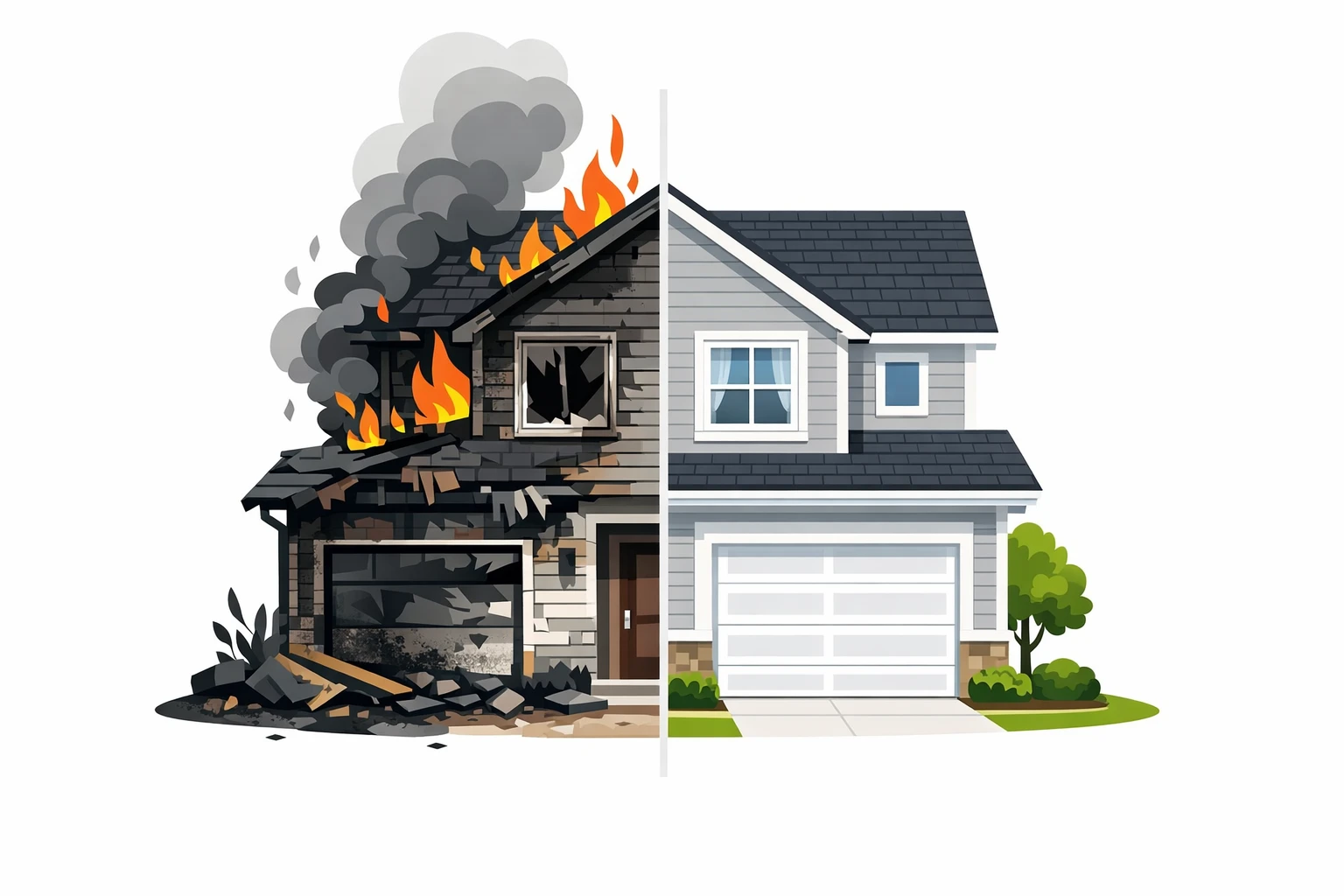
What is Fire Damage Restoration?
Learn about fire damage restoration, its components, types, benefits, and its use cases. Additionally, debunk common misconceptions and explore related concepts.
Looking for one? See our ranking of 29 fire damage restoration in Sydney
How Fire Damage Restoration Works
Fire damage restoration is a specialised process that involves a series of steps to clean, repair and restore properties after a fire incident. It starts with an immediate response to halt the complications caused by fire, smoke, and soot. This is followed by a comprehensive assessment to understand the extent and severity of the damage.
Once the evaluation is complete, the restoration team secures the property to prevent further damage. This might involve boarding up windows and placing tarps on damaged roofs. Then, water removal and drying are carried out if there's water damage due to firefighting efforts. This is followed by smoke and soot removal from all surfaces.
Next is the cleaning and sanitisation phase. The restoration team employs various techniques to deep clean the property, eliminate odours, and decontaminate the area. Finally, with everything clean and safe, the restoration work begins. This includes repair work, replacing damaged items, and restoring the property back to its pre-fire condition.
Key Components of Fire Damage Restoration
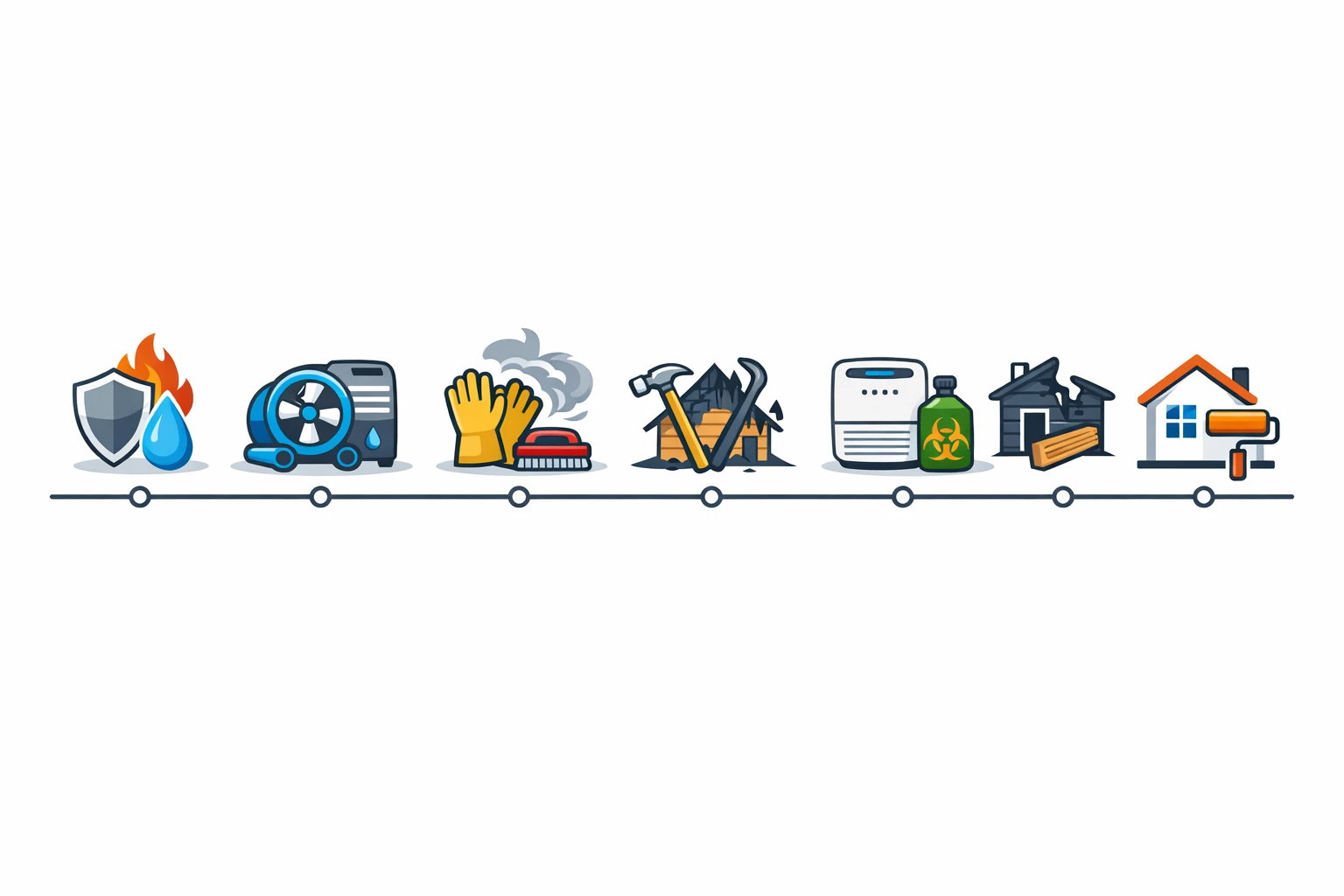
Immediate Response: Most service providers offer 24/7 emergency services to prevent further damage.
Assessment: A detailed inspection helps professionals understand the extent and severity of the fire damage and formulate a restoration plan.
Securing the Property: This includes boarding up windows and placing tarps on damaged roofs to protect them from weather or intruders.
Water Removal and Drying: This process helps in dealing with secondary water damage caused by firefighting efforts.
Smoke and Soot Removal: Specialists use specific techniques to remove soot and smoke from walls, ceilings, and other surfaces.
Cleaning and Sanitisation: High-quality cleaning products are used to clean and disinfect the property and belongings.
Restoration: The final step is to repair and restore the property to its original condition.
Types of Fire Damage Restoration
Residential Restoration: Residential restoration services focus on restoring homes affected by fire, including apartments, condos, and standalone homes.
Commercial Restoration: Commercial services cater to businesses, offices, retail stores, and other commercial properties that have suffered fire damage.
Historical Building Restoration: These services specifically cater to restoring historical buildings and heritage sites that have been damaged by fire.
High-Rise Building Restoration: These services involve restoring high-rise buildings that have suffered a fire.
Public Area Restoration: This includes restoration of public spaces like parks, streets, and government buildings that may have faced fire damage.
Type | Best for | Complexity Residential Restoration | Homes, condos, apartments | Medium Commercial Restoration | Businesses, retail stores, offices | High Historical Building Restoration | Heritage_sites, historical buildings | Very High High-Rise Building Restoration | High-rise buildings | Extremely High Public Area Restoration | Parks, streets, government buildings | Medium
Benefits of Fire Damage Restoration

Restored Comfort: Restoration returns your home or office to its original state, restoring your comfort and normal life.
Prevent Further Damage: Prompt action can minimise further damage caused by soot and water left behind after a fire.
Safety: Professionals ensure that the property is safe for occupation after the restoration.
Saves Time: Hiring professionals can significantly speed up the restoration process compared to attempting it yourself.
Value Retention: A thorough restoration process can help retain the value of your property.
Benefit | Explanation Restored Comfort | Returns your home or office to its original state. Prevent Further Damage | Minimises damage caused by soot and water. Safety | Ensures that the property is safe for occupation. Saves Time | Speeds up the restoration process compared to a DIY approach. Value Retention | Helps retain the value of your property.
Use Cases or Applications
1. Residential fire: A house in Sydney has suffered extensive smoke damage due to a kitchen fire. 2. Commercial fire: A warehouse in New South Wales experienced a major fire, damaging valuable inventory. 3. Historical building fire: An old townhouse in NSW's heritage-listed district has been damaged in a fire. 4. Electrical fire: A home suffers an electrical fire caused by faulty wiring. 5. High-rise building fire: A fire damage restoration service is used after a small electrical fire in a Sydney high-rise apartment building. 6. Wildfire: A home at the border of a national park in NSW has suffered damage due to a nearby bushfire. 7. Office fire: Smoke and water damage result from a small fire extinguished in an office building in Sydney.
Considerations Before Adoption
- Does the restoration service offer 24/7 emergency response? - What is the company's experience in dealing with fire damage restoration? - Will the company assist in dealing with your insurance provider? - Does the company use industry-standard equipment and techniques? - Will the service take care of both structural damage and residual smoke or soot? - Are the professionals fully trained and certified in fire damage restoration?
Making the right choice when selecting a fire damage restoration service is crucial. Considerations can differ, so it's important to carefully evaluate services based on your specific needs.
Common Misconceptions
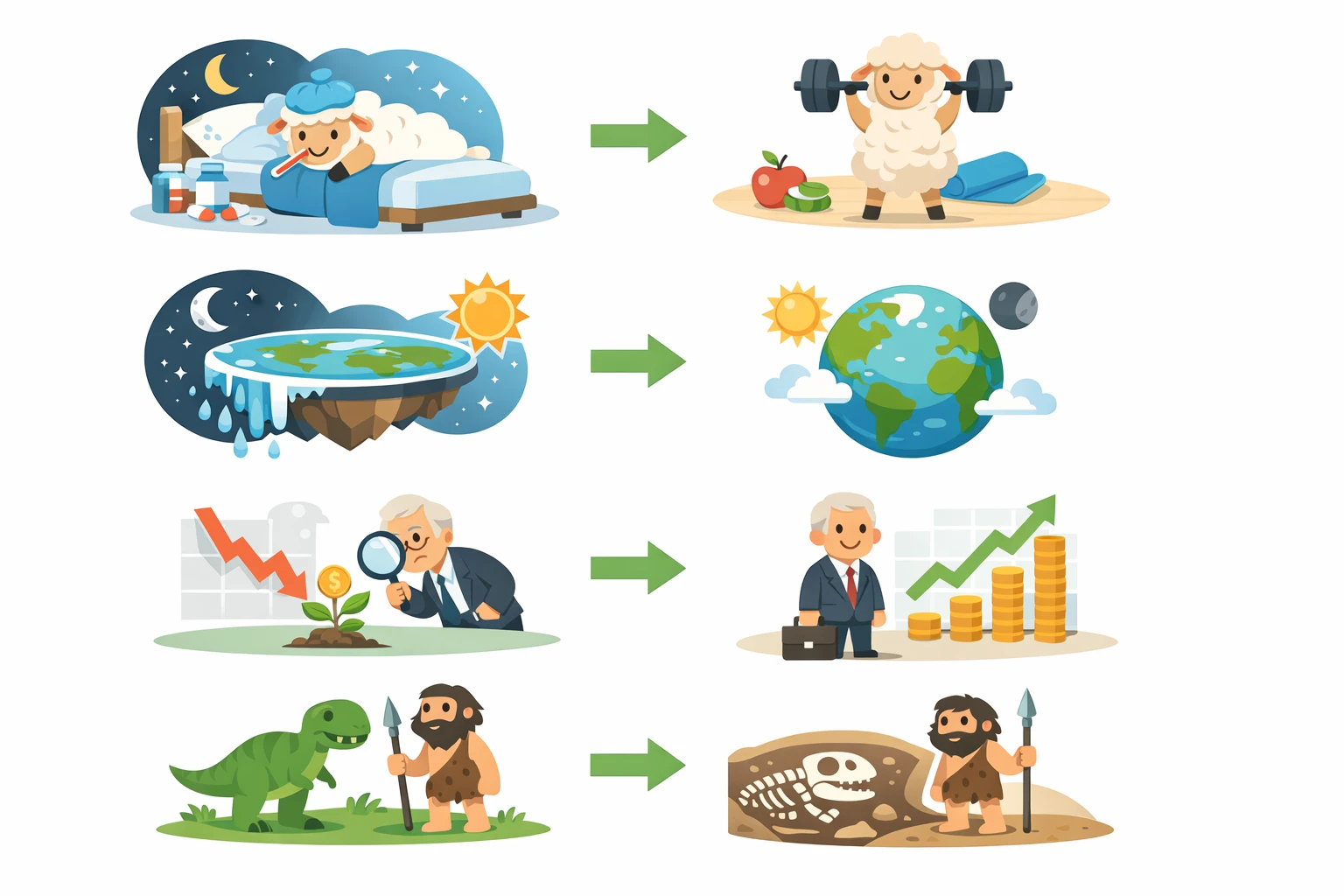
Myth: Restoration can start days after the fire → Reality: Immediate action is necessary to avoid further damage from soot and water. Myth: You can clean up fire damage by yourself → Reality: Professionals have the skills and tools to do a thorough job, way beyond what an untrained person can do. Myth: All of your stuff is ruined and must be replaced → Reality: Many items can potentially be cleaned, repaired, and restored with professional help. Myth: The home is safe to enter right after the fire is out → Reality: Structural integrity may be compromised, making it potentially hazardous to enter without a professional assessment. Myth: Smoke damage isn’t serious → Reality: Smoke can cause significant and persistent damage if not addressed properly.
Conclusion
Fire damage restoration is a critical service that helps individuals and businesses recover from the aftermath of a severe fire incident. In Sydney, NSW, and throughout Australia, these services provide the necessary expertise and mechanisms to restore properties to their pre-fire condition. Whether you are dealing with a small kitchen fire or a much larger incident, professional fire damage restoration services can provide peace of mind and a path towards recovery.
Common questions
- What is fire damage restoration?
- Fire damage restoration is a process of cleaning, repairing, and restoring property back to its pre-fire condition after a fire incident.
- Do I need a professional fire damage restoration service?
- Yes, professionals are experienced, having specialised tools and techniques to handle fire, smoke, water, and soot damage effectively.
- Can all fire-damaged items be restored?
- Restoreability depends on the severity of the fire and smoke damage. In cases of lesser damage, many items can be cleaned and restored.
- Is fire damage covered by insurance?
- Coverage can vary greatly depending on your policy. It's best to check with your insurance provider for specific information.
- What happens after the fire is extinguished?
- Once the fire is extinguished, the fire damage restoration process can begin. This includes assessment, securing the property, water removal and drying, smoke and soot removal, cleaning, and sanitising.
- How long does fire damage restoration usually take?
- The time frame depends on the severity of the damage and the size of the property. It can range anywhere from a couple of days to several weeks.