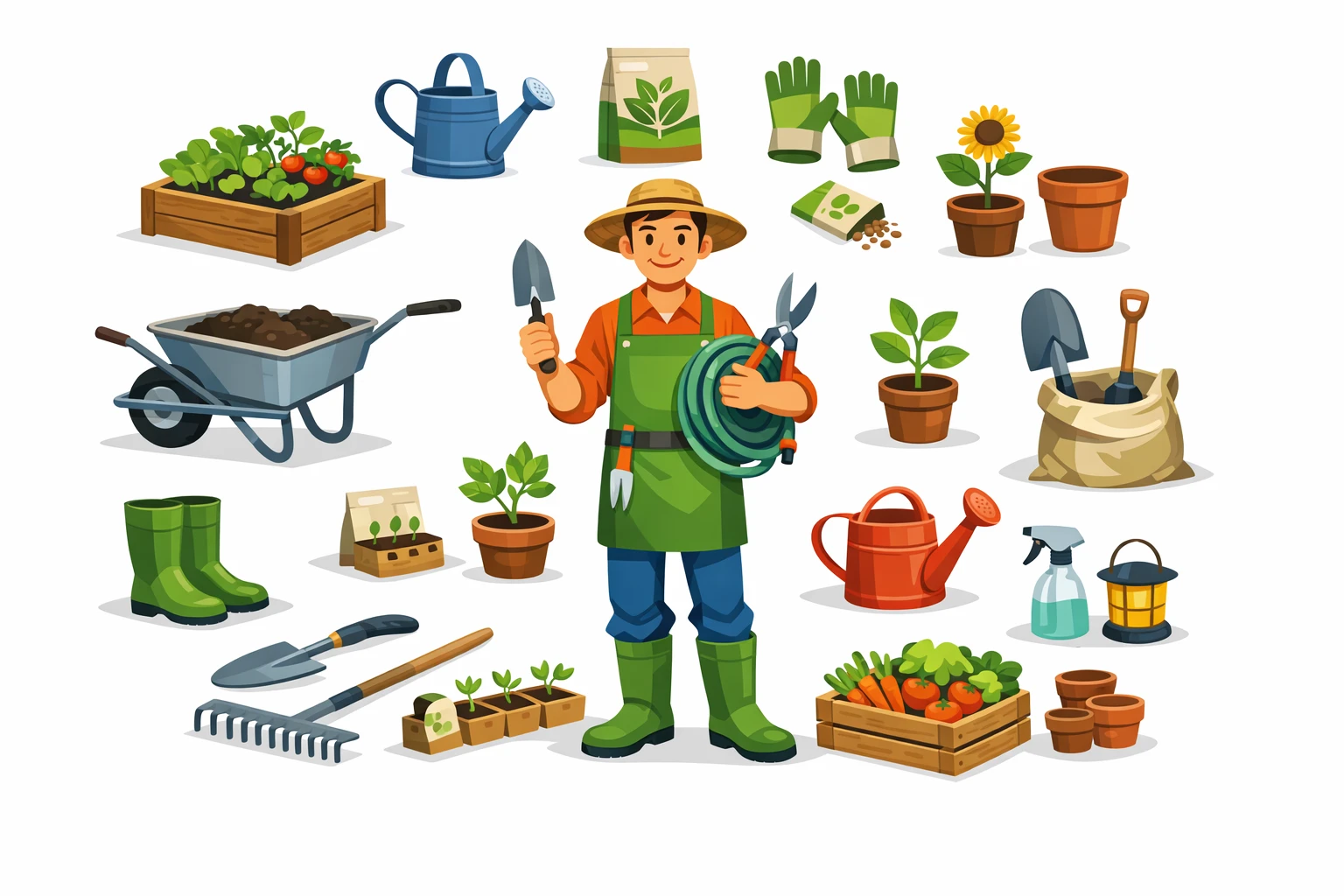
What are Gardeners?
Explore the key role and skills of gardeners, how they work, their different types, benefits, and common misconceptions.
Looking for one? See our ranking of 44 gardeners in Sydney
How Gardeners Work
Gardeners are professionals specializing in the creation and maintenance of gardens and other green spaces. The work of gardeners involves a variety of tasks, from basic lawn mowing and pruning to landscape design and plant health care. This often means working with a range of tools and equipment, dependent on the nature and scale of the gardening task.
The process begins with the gardener assessing the area to determine its needs and potential. This could involve soil analysis, mapping out the area, and planning where to place plants for optimum growth. Following the preliminary assessment, gardeners move on to the practical work. This often involves preparing the soil, planting seeds or saplings, laying down mulch for weed control, pruning existing plants, and maintaining garden features such as pathways, fences, or garden beds.
In maintaining a garden, gardeners often have to monitor for plant diseases and pests. They may also need to ensure plants are receiving sufficient water and nutrients. In many cases, gardeners will regularly visit a location, allowing them to keep the area thriving and healthy over time. Gardeners in NSW may also have specific knowledge about local plant species and climate conditions.
Key Components of Gardeners

Gardeners combine practical skills with a deep understanding of the natural environment. Key components include horticultural knowledge, physical stamina, creativity, problem-solving ability, and effective communication skills.
Horticultural knowledge is integral to a gardener's role, ensuring they understand plant and soil health, and can apply appropriate gardening techniques.
Physical stamina is essential because gardening often involves physical labor, including digging, lifting, and general manual work.
Creativity is evident in tasks such as garden design and landscape architecture, where aesthetic vision is important.
Problem-solving skills are used to tackle challenges like pest invasions or plant diseases.
Effective communication skills help gardeners understand the needs and expectations of their clients, and explain their plans or any issues that arise.
Types of Gardeners
Gardeners can be sorted into different types depending on their specialization, and each type offers unique benefits.
Type | Specialization | Key Tasks Residential Gardeners | Manage private home gardens | Landscape design, lawn maintenance, pruning Commercial Gardeners | Maintain corporate or public green spaces | Lawn maintenance, planting, laying out flower displays Landscape Architects | Design large-scale outdoor spaces | Design landscapes, create project proposals, oversee construction Horticulturists | Specialize in the cultivation of plants | Grow and care for plants, educate about plant health Arborists | Specialise in the care of trees | Tree pruning, removal, and health checks
The best type of gardener for you can vary depending on the specific needs of your gardening project. Large landscaping projects may require the expertise of a Landscape Architect, while regular upkeep of a domestic garden could be handled by a Residential Gardener.
Benefits of Gardeners

Engaging the services of a professional gardener offers numerous benefits.
Benefit | Brief Description Expert Knowledge | Gardeners have a vast understanding of plants, soil, and climates Quality Work | Professionals can vastly improve the health and appearance of your garden Saves Time | Taking care of a garden can be time-consuming. A gardener can save you this time Prevent Damage | Incorrect gardening practices can harm your garden. Gardeners know how to avoid this Regular Maintenance | Gardeners can visit regularly, maintaining the health and aesthetics of your garden over time
Professional gardeners, with their knowledge and skills, can create a beautiful green space that complements your home or workspace, while also ensuring it lasts for years to come.
Use Cases or Applications
Gardeners can address many different needs, making them perfect for a range of scenarios. Landscape architects might be sought for large-scale revamps of public parks or to design the green spaces for new estates in Sydney. Residential gardeners could be hired to help busy families maintain their garden or help an elderly resident unable to manage their outdoor space. Commercial gardeners often work with businesses, for instance, maintaining the greenery in shopping centres or office complexes. Horticulturists might be engaged to manage specialised plant production within nurseries or farms, or for education roles within institutions. Arborists can be crucial when dealing with potentially dangerous circumstance such as storm-damaged trees or removing dead trees too close to buildings.
Considerations Before Adoption
Before hiring a gardener, it's good to consider the following questions and points:
- What specific services are needed? - How frequently will services be required? - Is there a specific budget for gardening services? - What is the gardener's experience and expertise? - Does the gardener carry necessary insurance? - How does the gardener handle garden waste?
The answers to these questions can help you select the right gardener that meets your needs and expectations.
Common Misconceptions

Myth: Any gardener can do any gardening job → Reality: Gardeners often specialize. An arborist would be better for tree care than a residential gardener, for instance.
Myth: Gardening is easy and doesn't require expertise → Reality: Professional gardening requires a depth of horticultural knowledge and experience.
Myth: Gardeners only work in the warmer months → Reality: Gardeners work year-round, each season providing different tasks and care needs.
Myth: Gardening isn't a physical job → Reality: Gardening often involves physical labor and can be quite physically demanding.
Myth: All you need to garden is to water and cut the grass → Reality: A thriving garden requires careful soil management, targeted watering, and specific pruning techniques.
Future of Gardeners
The future of gardening continues to evolve with advancements in technology and shifts in societal values. There’s an increasing interest in sustainable gardening practices, such as composting, rainwater collection, and organic gardening. As urban areas in NSW and beyond expand, urban gardening and the creation of green spaces is becoming increasingly important. Developments in gardening technology also provide gardeners with new tools, with capabilities for automatic watering, soil analysis, and even robotic lawn mowing. All these trends suggest a myriad of new opportunities and challenges for gardeners in the future.
Related Concepts and Comparisons
It can be helpful to compare gardening to related fields to better understand its unique role.
Concept | Similarities | Differences Gardeners vs Landscapers | Both work with plants and outdoor spaces | Gardeners focus on plant care, landscapes design larger outdoor spaces Gardeners vs Farmers | Both work with plants and soil | Gardeners focus on smaller spaces and varied plants, farmers on crop production Gardeners vs Groundskeepers | Both work maintaining outdoor spaces | Groundkeepers focus on cleanliness and safety, gardeners on plant health and aesthetics
Understanding these distinctions can ensure you engage the right professional for your project.
Conclusion
Gardeners play a vital role in creating and maintaining beautiful and healthy outdoor spaces. Their horticultural knowledge, practical skills, and creative vision offer many benefits, from improved garden health to time-saving maintenance. Hiring a professional gardener can ensure your green spaces are vibrant, beautiful, and well-cared-for, making them an invaluable asset for homeowners, businesses, and public spaces alike in NSW. It's worth considering your particular needs and making the right choice for you.
Common questions
- Why should I hire a gardener?
- A professional gardener can vastly improve the health and appearance of your garden with their expert knowledge. Hiring a gardener can save you time, prevent potential damage to your green spaces, and allow for regular maintenance.
- What services does a gardener provide?
- Gardeners provide a range of services including soil preparation, planting, pruning, lawn mowing, and garden design, among others. The exact services vary depending on their specialization and your gardening needs.
- What qualifications should a gardener have?
- Gardeners should ideally have horticultural knowledge, demonstrated through qualifications, training or experience in the field. Certain specializations may require specific qualifications, such as Landscape Architects needing to be licensed.
- Does a gardener do lawn maintenance?
- Yes, lawn maintenance such as mowing, aerating, and fertilising the grass, is part of a gardener's tasks.
- What is the difference between a gardener and a landscaper?
- Gardeners typically focus on caring for plants and small-scale aesthetic improvements. Landscapers usually work on larger-scale projects and may change the terrain, add paths, or design entirely new outdoor spaces.
- How often does a gardener need to visit?
- That depends on the type and size of your garden and its specific needs. Some gardens may require weekly maintenance while others may only need monthly visits.