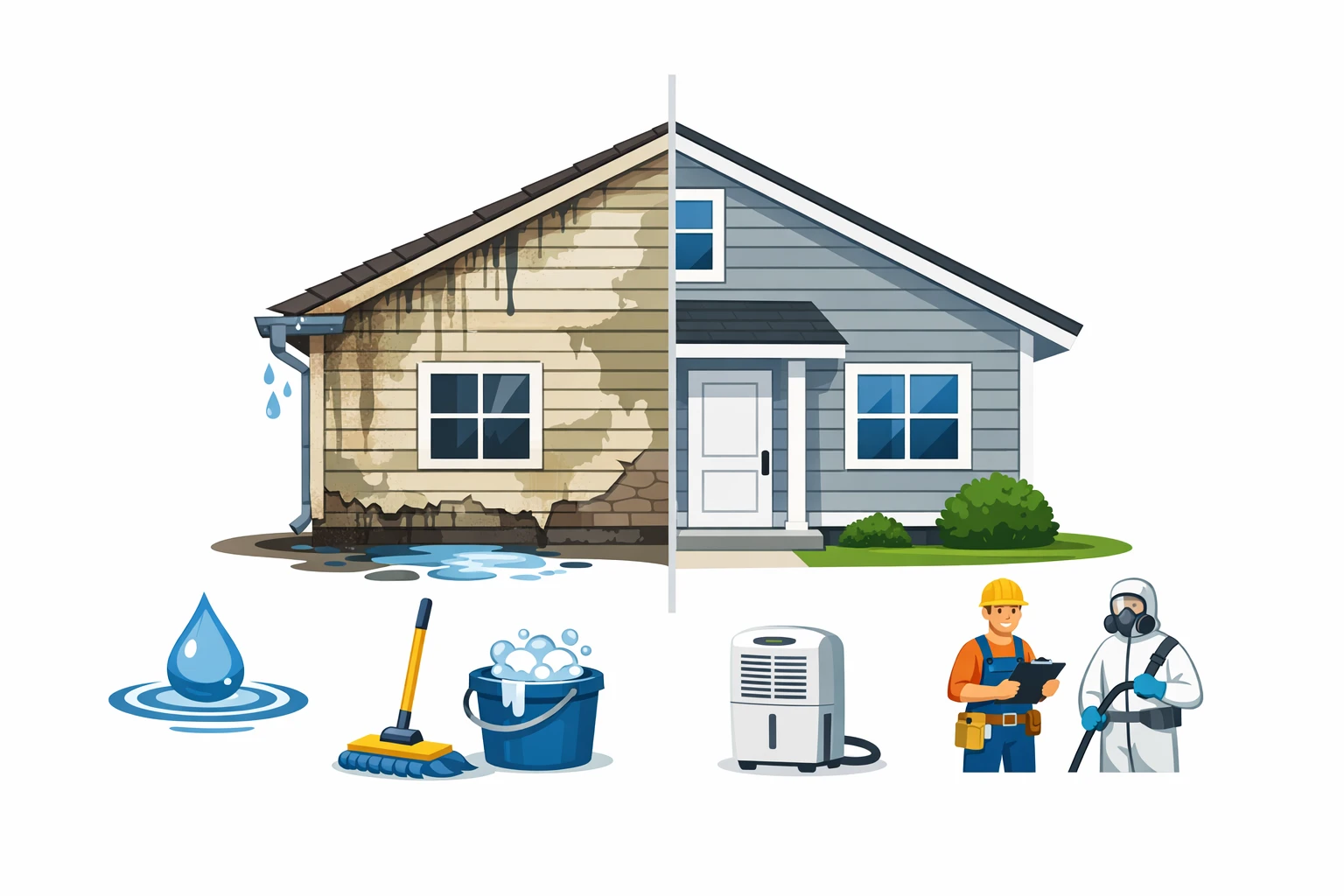
What is Water Damage Restoration?
Explore what water damage restoration is, how it works, its benefits, common misconceptions, and FAQs.
Looking for one? See our ranking of 34 water damage restoration in Sydney
How Water Damage Restoration Works
Water damage restoration is the process of cleaning, repairing, and restoring (or replacing) property that has suffered water damage. It involves a series of steps that typically start with thorough inspection and assessment of both damage and safety concerns. This is usually followed by water extraction, which includes removing excess water and salvaging personal belongings or important items. Then, a drying process is implemented, involving dehumidification and drying of the affected areas, including walls, flooring, and carpets. Finally, cleaning, sanitizing, and restoration work is carried out to bring the property back to its original condition. In Sydney, NSW, many professional restoration services also involve follow-up visits to ensure the restoration is successful and to detect any new possible risks.
Key Components of Water Damage Restoration
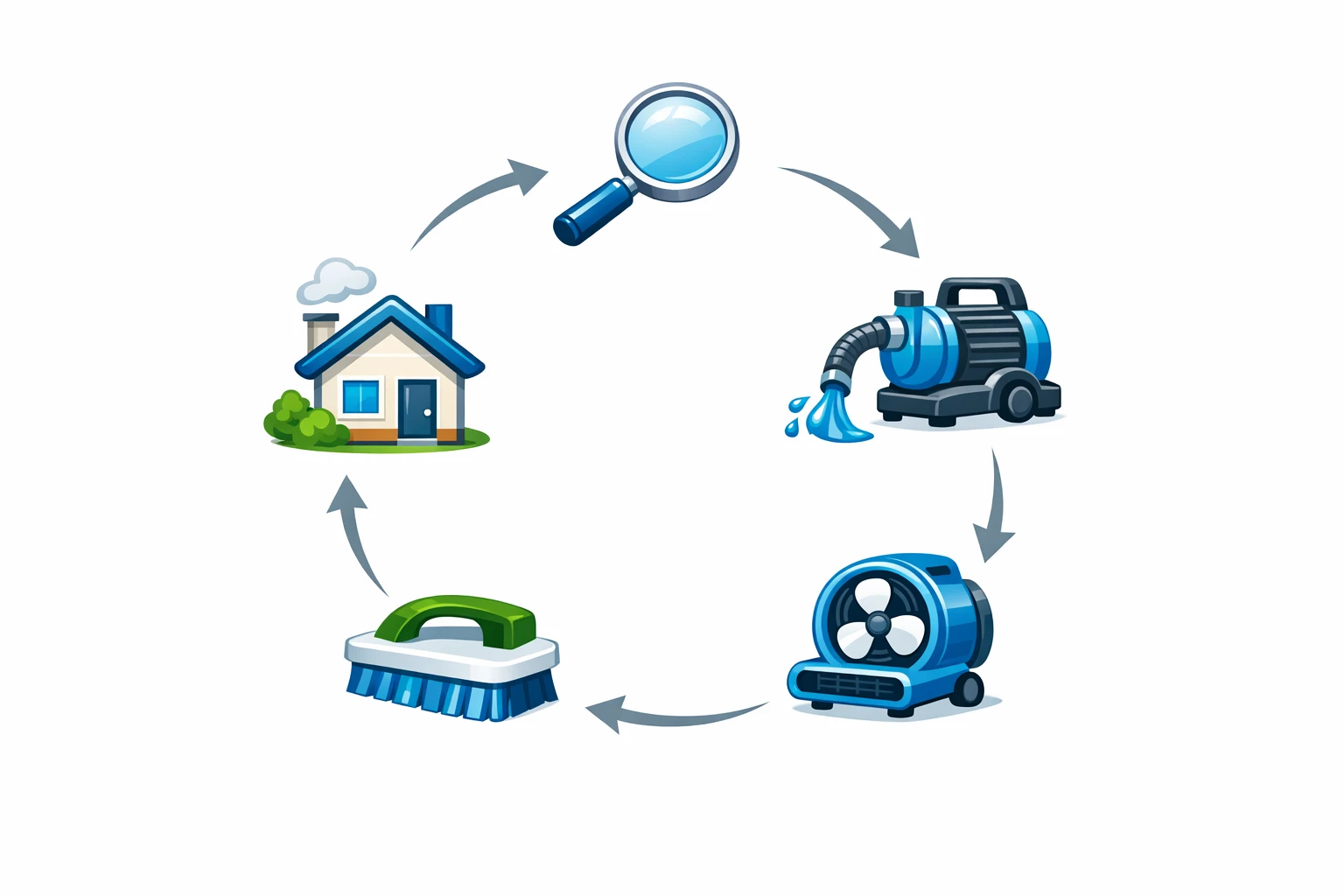
Inspection and Assessment: Teams first inspect the property to determine the level of water damage and plan the necessary steps.
Water Extraction: Professionals use pumps and vacuums to remove water and prevent further damage.
Drying and Dehumidification: Equipment like air movers and dehumidifiers are used to dry remaining water.
Cleaning and Sanitizing: Areas are thoroughly cleaned and sanitized to remove potential hazards and keep the environment safe.
Restoration and Follow-up: The final step is restoring materials like drywall and insulation, and making follow-up visits to ensure safety.
Types of Water Damage Restoration
Clean Water Restoration: Involves damage from clean water sources like pipes and rainwater.
Grey Water Restoration: Handles damage from sources like washing machines, which may contain minor contaminants.
Black Water Restoration: Covers damage from highly contaminated sources such as sewage.
Secondary Damage Restoration: Manages problems like mould caused by the initial water damage.
Type | Best for | Complexity Clean Water | Damage from clean water sources like pipes | Low Grey Water | Cleanup from appliances like washing machines | Medium Black Water | Restoring damage from contaminated sources | High Secondary | Resolving issues like mould from initial damage | Variable
Benefits of Water Damage Restoration

Quick Recovery: Professional services often enable faster recovery from water damage.
Less Health Hazards: Proper restoration helps to avoid health hazards like mould growth.
Reduced Costs and Losses: Earlier intervention can often prevent escalation of the damage, thus reducing costs and losses.
Professional Assessment: Expert service provides a thorough assessment for comprehensive restoration.
Benefit | Description Quick Recovery | Speeds up recovery time Less Health Hazards | Helps prevent health hazards like mould Reduced Costs and Losses | Can reduce overall cost and losses from damage Professional Assessment | Thorough assessment for comprehensive restoration
Water damage restoration brings several benefits to home and business owners in Sydney, NSW and beyond. By efficiently restoring a property after water damage, one can quickly return to a normal, safe, and comfortable living or working environment.
Use Cases or Applications
Flood Recovery: Rescuing personal belongings and restoring homes after a flood.
Burst Pipe: Repairing damage caused by a burst or leaking pipe.
Appliance Leaks: Addressing water damage caused by broken appliances, such as washing machines or dishwashers.
Roof Leaks: Helping families and businesses deal with water damage from leaking roofs, common in rainy NSW seasons.
Mould Remediation: Managing mould problems that arise from unaddressed water damage.
Basement Water Damage: Restoring basements which often suffer from dampness and leaks.
Post-Fire Cleanup: Handling water damage that can occur after putting out a fire.
Considerations Before Adoption
Does the service have positive reviews in Sydney or broadly in NSW?
Do they provide a detailed plan of action for the restoration process?
Does the company work with insurance companies to manage claims?
Do they offer emergency services, often crucial in water damage situations?
Are their professionals trained and certified to handle various water damage scenarios?
Is there transparent pricing provided before the work commences?
Understanding the process, asking the right questions, and conducting due diligence is crucial before hiring a water damage restoration service.
Common Misconceptions
Myth: It's more cost-effective to handle water damage clean-up yourself. → Reality: Without professional expertise, you may miss some damages, leading to costly future problems like mould.
Myth: All water damage restoration companies offer the same services. → Reality: Services can vary, so it's crucial to understand what a specific company offers.
Myth: The home insurance policy will cover all water damage. → Reality: Coverage will depend on the policy and the source of the damage.
Myth: Water damage restoration is only about removing water. → Reality: The process includes inspection, water extraction, drying, cleaning, and restoration.
Myth: Once the water is gone, the property is safe. → Reality: Without proper drying and sanitizing, there can be long-term issues like mould growth.
Future of Water Damage Restoration
The future of water damage restoration is likely to see continued advancements in technology and techniques. Advanced moisture detection systems, drying tools, and environmentally friendly cleaning materials will continue to improve efficiency and effectiveness. In areas like Sydney and wider NSW, where climate conditions can lead to a higher risk of water damage, it's likely that there will be an increased demand for these professional services. Insurance companies might also start to more explicitly partner with restoration companies to ensure quicker, cost-effective, and comprehensive service for their clients. However, remember that the industry can vary, and trends might develop differently across regions.
Related Concepts and Comparisons
Water Damage Repair vs. Restoration: While repair focuses on fixing damages caused by water, restoration involves returning the property to its pre-damage condition.
Water Extraction vs. Drying: Extraction involves removing standing water, while drying is about eliminating moisture from materials and air.
Professional vs. DIY Restoration: Professional services benefit from specialized equipment and expertise but can be more costly, while DIY can be cheaper but may miss hidden damages.
Concept | What it offers | Limits Water Damage Repair | Fixes spots damaged by water | May not restore areas to pre-damage state Water Extraction | Removes standing water | Doesn’t deal with moisture in materials/air Professional Restoration | Uses specialized equipment/expertise | Can be more costly DIY Restoration | A cheaper alternative | Risk of missing hidden damages
Conclusion
Armed with a better understanding of what water damage restoration entails, homeowners and businesses in Sydney, NSW, and across Australia will be better equipped to deal with such incidents effectively. Remember, if you're faced with water damage, it's essential to act swiftly, ensure safety, and call on professionals who can thoroughly manage the restoration process. That way, you can return to normality as quickly and efficiently as possible.
Common questions
- How long does water damage restoration take?
- The process can vary in length depending on the extent of the damage and the size of the property. It may take anywhere from a few days to a few weeks.
- Can I stay in my home during the restoration?
- Depending on the severity of the water damage, it might be unsafe or uncomfortable to stay in your home during the restoration process. It is best to discuss this with the restoration company.
- Is water damage covered by insurance?
- It depends on your insurance policy and the source of the damage. It’s recommended to contact your insurance provider for detailed information.
- Can water damage lead to mould?
- Yes, if not properly addressed, water damage can lead to mould growth, which is a health hazard.
- What causes water damage?
- There are many potential causes of water damage, including leaks, burst pipes, appliance malfunctions, and natural disasters like floods.
- What is the first thing I should do after water damage?
- Ensure safety first, then try to stop the water source if possible, and call a professional water damage restoration company as soon as you can.